




Before & after content strategy: How to turn case results into your best SEO asset
Most agencies have strong client results that never get published. Learn how to turn those results into structured before-an...




Your best marketing content already exists. It is sitting in client reports, Google Search Console exports, and CRM dashboards built for internal use and never published. The problem is not a lack of results. It is a lack of a system to turn those results into content that earns organic traffic and converts new prospects.
This article walks through a complete framework for building before-and-after content from your existing client work. You will learn how to extract and document results, structure them for search and AI Overviews, optimize for EEAT, handle client permission, repurpose across formats, and measure what is actually working.
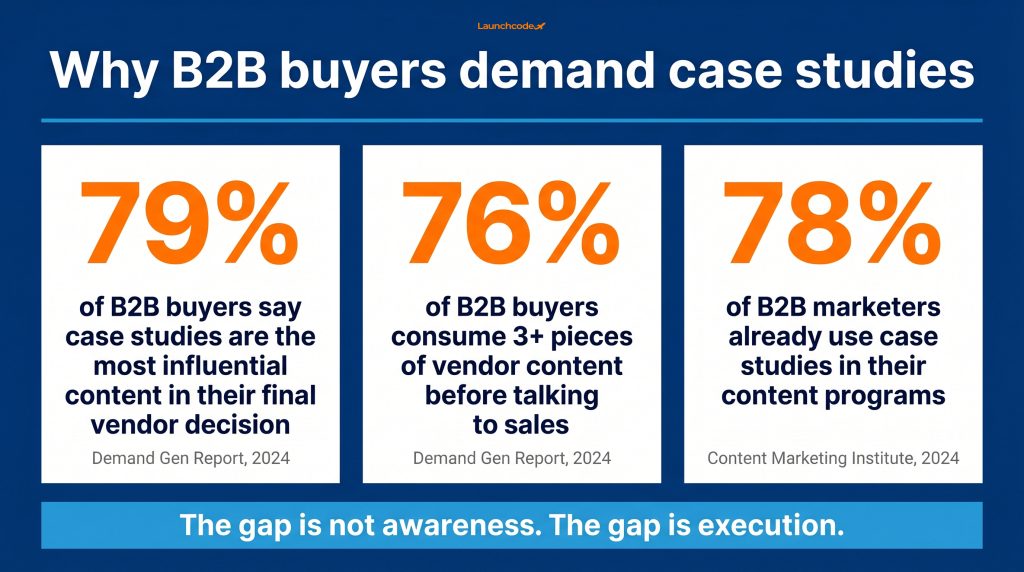
According to the Demand Gen Report, 79% of B2B buyers call case studies the most influential piece of content in their final vendor decision. Despite that, most agencies sit on their results. The data lives in slide decks and client portals, never touched by a search crawler. The results exist. The SEO value does not, because the content was never built.
Ready to grow your organic traffic?
Get a free SEO audit from the Launchcodex team.
76% of B2B buyers consumed at least three pieces of vendor content before speaking to a sales rep, per the same Demand Gen Report. A single case study page is not enough. You need results published across multiple touchpoints and formats.
Meanwhile, 78% of B2B marketers report using case studies in their content programs, according to the Content Marketing Institute. Most of those studies live behind gated forms or PDF downloads with no organic discoverability. The gap is not awareness. The gap is execution: a repeatable system for extracting results and publishing them as indexed, structured, searchable content.
Consider a common scenario. An agency runs a six-month SEO and GEO program for a B2B client. Organic traffic triples. Keyword rankings grow from 40 to 600. The account manager sends a results summary over email, drops screenshots into a slide deck, and moves on. That data never becomes a blog post, a case study page, or an asset that prospective clients can find. Six months later, a new prospect asks for proof of results in a similar industry. The agency scrambles to rebuild the narrative from memory.
That cycle repeats across the industry every week. The fix is a documented extraction process built into how you deliver work, not something you retrofit later.
A standard case study describes what happened. A before-and-after piece proves the size of the gap. The contrast between the starting state and the outcome quantifies the cost of inaction and the value of the solution at the same time. Most case studies fail because they skip the baseline, and without a baseline, results lack credibility.
As ClickRank.ai put it in their breakdown of on-page case study value: "Instead of saying 'optimize your titles,' a case study says, optimizing this title from 55 to 45 characters, adding the modifier 2025, and moving the main keyword to the front resulted in a 30% increase in CTR and a four-position ranking jump. That level of specificity is priceless."
That specificity earns organic rankings. Google's quality systems reward content that demonstrates first-hand knowledge of a subject. Specific, documented, time-stamped results are a direct signal of that knowledge.
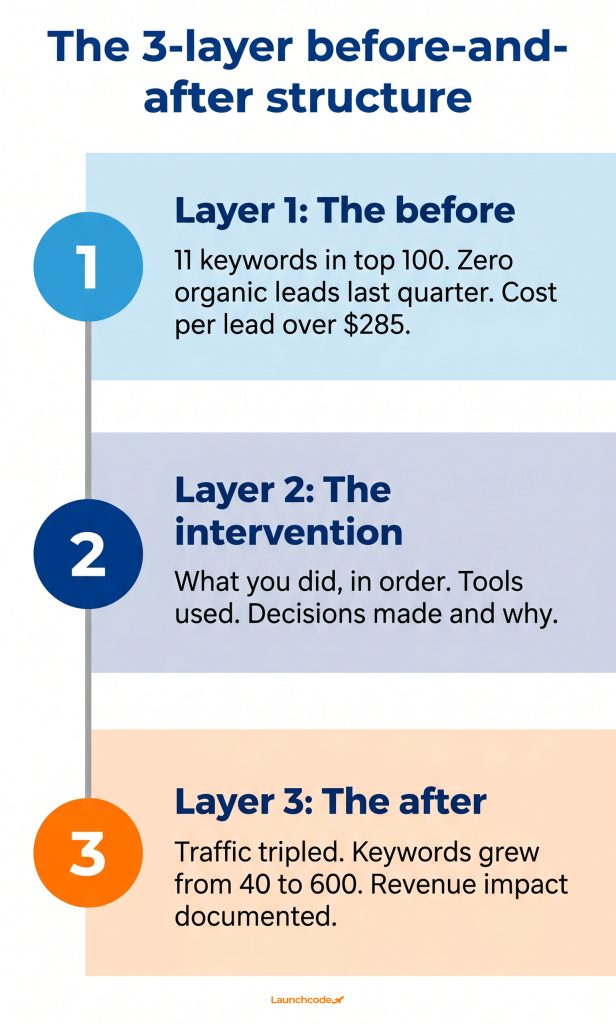
Every strong before-and-after content piece follows three distinct layers.
Layer 1, the before: Where was the client before the engagement? Document the specific, measurable conditions, including traffic volume, keyword count, lead volume, conversion rate, and cost per lead. Not "low traffic," but "11 keywords in the top 100, zero organic leads in the prior quarter, and a cost per lead from paid channels exceeding $285."
Layer 2, the intervention: What specific actions did you take, in what order, using what tools and frameworks? This is the methodology section. It demonstrates expertise and gives other practitioners something to learn from, which is what drives backlinks and shares.
Layer 3, the after: What changed, over what time period, and what is the business impact beyond traffic? Organic sessions matter. Revenue impact, lead quality, and cost-per-acquisition matter more.
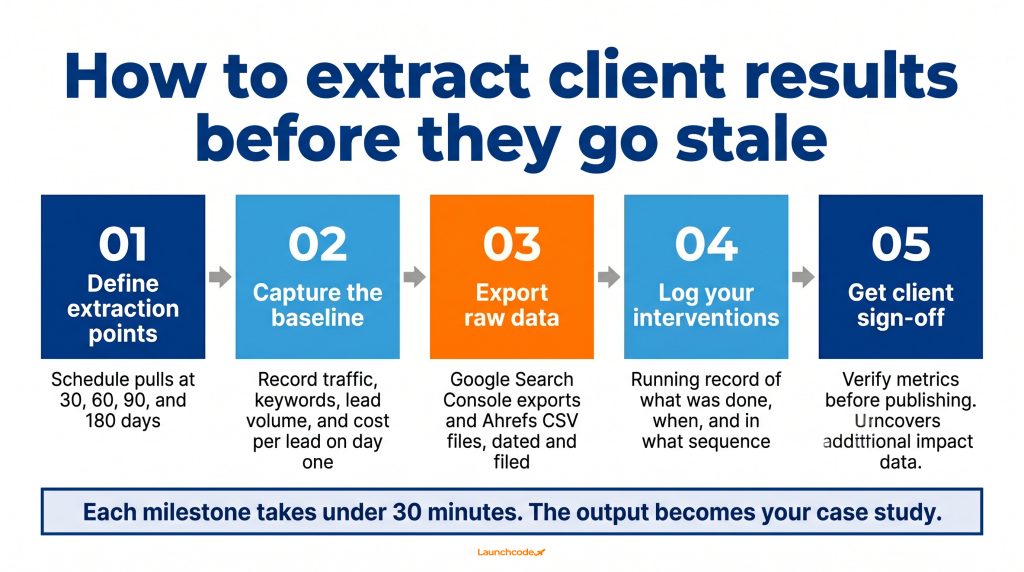
Client result data decays fast. Screenshots get lost, tools get migrated, and account access gets revoked. Building a result extraction habit at defined milestone points inside every engagement, rather than at the end when memory is fuzzy and access is limited, is the fastest way to build a publishable content pipeline without starting from scratch.
The process should take under 30 minutes per milestone.
"The agencies that compound their content output treat documentation as a delivery step, not an afterthought. Build the result capture into the workflow itself. If it is not in the system, it does not get published."
Derick Do, Co-Founder and Chief Product Officer
A before-and-after content piece must serve two audiences: the human reader who wants proof and clarity, and the search engine that needs structured, entity-rich signals to understand and surface the page. The structure that works for both is a clear question-answering hierarchy with a specific result in the title, a documented baseline in the opening, and measured outcomes with supporting data throughout. That same structure is what AI Overviews and RAG systems extract into generated answers.
Case study titles that rank are specific and result-forward. The formula that consistently works:
"How [client type] went from [starting state] to [outcome] in [timeframe]"
Real examples of strong titles:
Target the query your ideal prospect is actually searching. That is rarely "our case study." It is more likely "SEO results for healthcare marketing" or "content strategy outcomes for B2B agencies." Use Google Search Console, Ahrefs, or Semrush to confirm search volume before finalizing the title.
Build every case study page with this sequence:
For schema markup, apply Article schema or CreativeWork schema via Rank Math or Yoast. Include datePublished, dateModified, author, and headline fields at minimum. This structured data helps Google surface the content in relevant search contexts and improves GEO visibility in AI-generated answers.
Case study pages are high-trust, bottom-of-funnel assets. Link to them from relevant service pages, related blog posts covering the tactics used, and your main results or portfolio hub. Link outward from case pages to service pages that describe the featured work, tactical posts that go deeper on the methods, and contact pages to capture intent while engagement is high.
After Google added "Experience" to its EEAT framework and following the December 2025 core update that penalized generic AI-generated content at scale, first-hand documented results have become one of the most direct EEAT signals a service business can publish. A before-and-after case study that shows real outcomes, named or clearly described clients, and specific methodologies satisfies all four EEAT components at once.
Single Grain, in their analysis of high-performing EEAT content types, identified collaborating with clients to document journeys and results as one of the highest-impact approaches available. AI can describe a process. Only someone who has done the work can show what happened when they did it.
Google's December 2025 core update reinforced this. Content farms relying on generic, unreviewed AI content lost significant organic rankings. Pages demonstrating documented experience, specific outcomes, and transparent attribution maintained and often gained visibility, according to an EEAT analysis from iMarkinfotech.
What EEAT looks like in practice inside case content:
"Case results are the only content type that simultaneously answers the buyer's final question, signals real experience to Google, and builds pipeline from search. That is why proof-based content belongs at the center of every growth program, not at the edges."
Tanner Medina, Co-Founder and Chief Growth Officer
Anonymized results with zero verifiable context: "A client in a competitive industry saw 3x traffic" gives Google nothing to evaluate. Describe the industry, company size, market, and starting conditions clearly, even without naming the client.
Publishing without a named author: Case pages with no author attribution lose a key trust signal. Every case study page should have a named author, a bio link, and a clear publication date.
Omitting the update date: Case content with no publication or revision date appears stale to both readers and crawlers. Set a reminder to refresh high-performing case pages at six and twelve months.
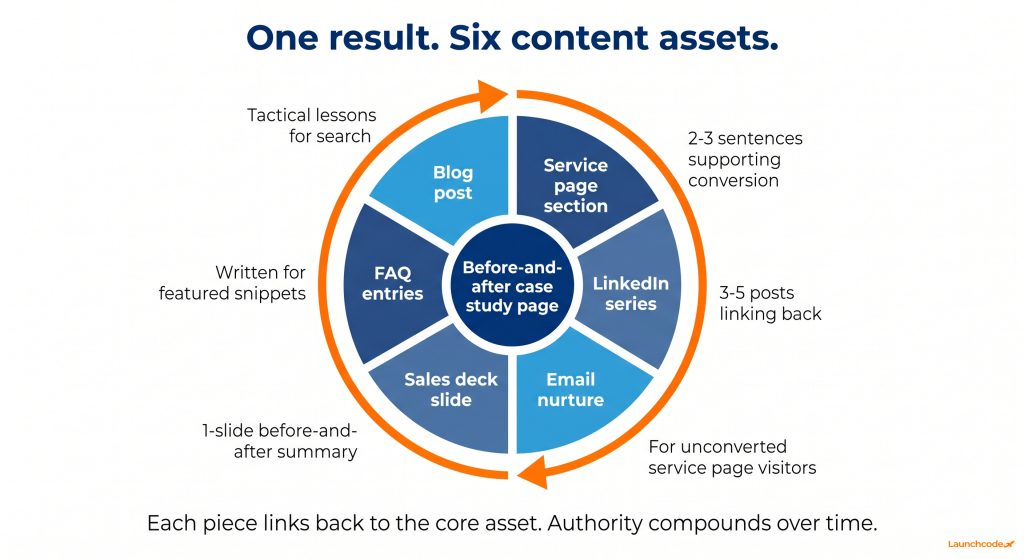
One set of client results can generate five to ten publishable content assets with no additional client work. The approach starts with a long-form before-and-after case study as the hero asset, then breaks it into derivative pieces for blog posts, service page sections, LinkedIn posts, email campaigns, and sales materials. Each piece links back to the core case study, driving compounding organic authority over time.
B2B companies that blog consistently generate 97% more inbound links than those that publish infrequently, according to HubSpot research. That compounding link equity is what makes the flywheel model outperform one-off publishing.
Amit, founder of The Links Guy, saw this play out directly when his agency started publishing case content systematically: "We started seriously publishing content on our blog in early 2024, and if you compare just the last six months versus the previous six months, you can see already some significant movement. Total clicks increased from 1.74K to 3.57K."
Starting asset: one fully documented before-and-after case study page, optimized for search.
Derivative assets from that single result:
Companies publishing 16 or more blog posts per month generate 4.5 times more leads than infrequent publishers. The flywheel is how you reach that volume without producing entirely new research each time.
The most common reason agencies do not publish case content is not a lack of results. It is not knowing how to ask for permission. A simple, structured approach to client disclosure, built into the engagement from the start, removes this friction and keeps the content pipeline moving.
Follow this process from day one of any engagement.
Anonymized results can be just as credible as named ones. A description like "a multi-location healthcare group in the Southwest saw organic leads increase by 140% in five months after a structured content and GEO program" is specific enough to be believable without identifying anyone.
Case content that earns rankings and drives leads is fully measurable. Track a small set of metrics that connect SEO performance to pipeline impact, not just vanity numbers like impressions or social shares. Without this, publishing case content is a creative exercise. With it, you can identify which formats and topics convert best and prioritize accordingly.
| Metric | What it tells you | Where to find it |
|---|---|---|
| Organic sessions to case pages | Whether the page is attracting search traffic | Google Search Console, GA4 |
| Average time on page | Whether readers are engaging with the full content | GA4 |
| Keyword rankings for the case page | Which queries the page surfaces for | Ahrefs, Semrush, Search Console |
| Form submissions from case pages | Whether the content converts readers to leads | GA4 events, CRM |
| Inbound links to case pages | Whether other sites cite your results | Ahrefs, Semrush |
| Clicks from case page to service page | Whether case content moves readers toward a conversion action | GA4 |
Review these monthly. If a case page earns organic sessions but no form submissions, the CTA or internal link structure needs work. If it earns links but low traffic, the keyword targeting in the title and meta description likely needs refinement.
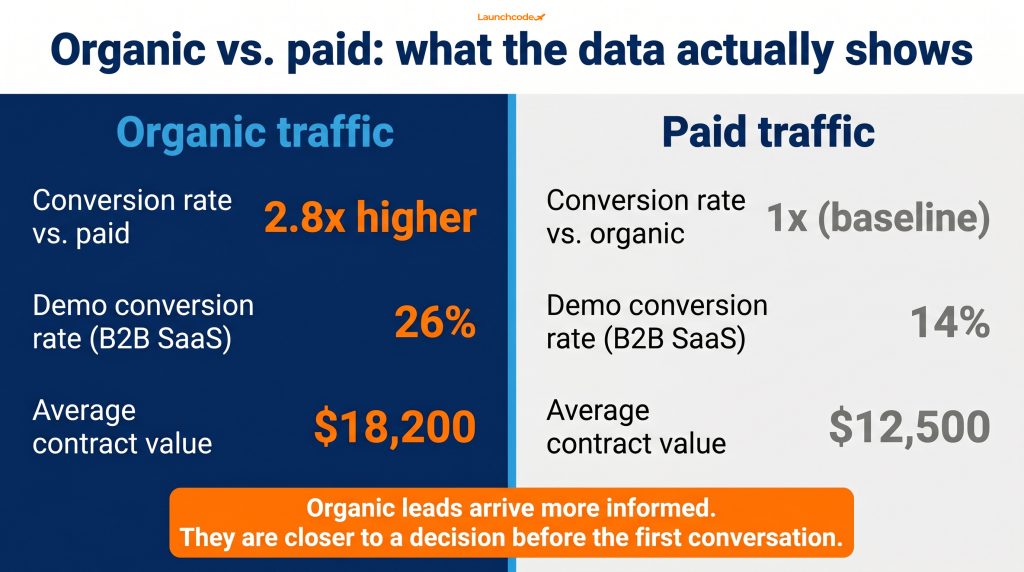
One B2B SaaS brand analyzed by Launchcodex converted SEO-sourced leads to demos at 26%, compared to 14% for PPC leads, with an average contract value of $18,200 versus $12,500 for paid traffic. Organic visitors who find your case content arrive having already researched. They are closer to a decision and more qualified than the average paid click.
Organic traffic converts at 2.8 times the rate of paid traffic, according to Omnibound's 2026 content marketing research. The difference is intent. Paid traffic is interrupted. Organic traffic is searching.
Your results are already there. The work has been done. The impact has been delivered. What most agencies are missing is the system that moves those results from a client folder into a published, indexed, searchable content asset.
Build the extraction habit into your delivery process from day one. Document the before state at onboarding. Log your interventions as you work. Pull milestone data at 30, 90, and 180 days. Get client approval using a two-track disclosure model. Then build the page with a result-forward title, a three-layer structure, Article schema, and internal links to your content strategy services and relevant service pages.
Repurpose what you publish. One case study becomes a blog post, a service page section, a LinkedIn series, and an email. Each piece links back to the core asset and adds to its authority over time.
87% of B2B marketers say content marketing helped create brand awareness, 74% say it generated demand and leads, and 49% say it directly drove revenue, according to Content Marketing Institute research. Case content built on real, documented outcomes serves all three functions at once.
The results are yours. Now build the system that makes them work.
Apply Article schema as your primary type. Include the headline, datePublished, dateModified, author, and publisher fields. If your case study page includes a question-and-answer section, add FAQPage schema alongside it. Use Rank Math or Yoast in WordPress to apply schema without manually editing code.
Yes. Anonymized case content can be highly credible when it includes specific industry context, company size, starting conditions, and outcome metrics. Describe the client as "a mid-market SaaS company in the HR tech space" rather than by name. Most clients who decline named disclosure will agree to this format.
For competitive queries, expect three to six months before a well-optimized page builds meaningful ranking position. For long-tail, specific queries such as "SEO results for dental groups" or "content strategy case study for B2B SaaS," pages with strong on-page structure and relevant internal links can appear in search results within four to eight weeks.
A case study page is a standalone, dedicated page optimized for bottom-of-funnel search queries. It is structured around a single client engagement and lives on a permanent URL. A case study blog post extracts lessons or insights from that engagement and targets broader, more informational queries. Build both. The blog post drives informational traffic and links back to the core case page.
Start the conversation at onboarding, not after the engagement ends. Add a brief disclosure clause to your service agreement. At each milestone, send a short, specific approval request with a defined review window. Offering an anonymized track as an alternative to named disclosure significantly increases the response rate.




Most agencies have strong client results that never get published. Learn how to turn those results into structured before-an...
Learn how to run a technical SEO audit in 2026. Covers crawlability, Core Web Vitals, duplicate content, schema markup, AI c...
See how ChatGPT, Perplexity, Gemini, and Claude choose which pages to cite, backed by data from Pew, Ahrefs, and Princeton, ...