





Google's new loyalty features and the rise of AI-first visibility: What businesses need to know
Google now rewards loyalty over clicks. See how Preferred Sources, Search Profiles, and Subscription Linking shape AI visibi...





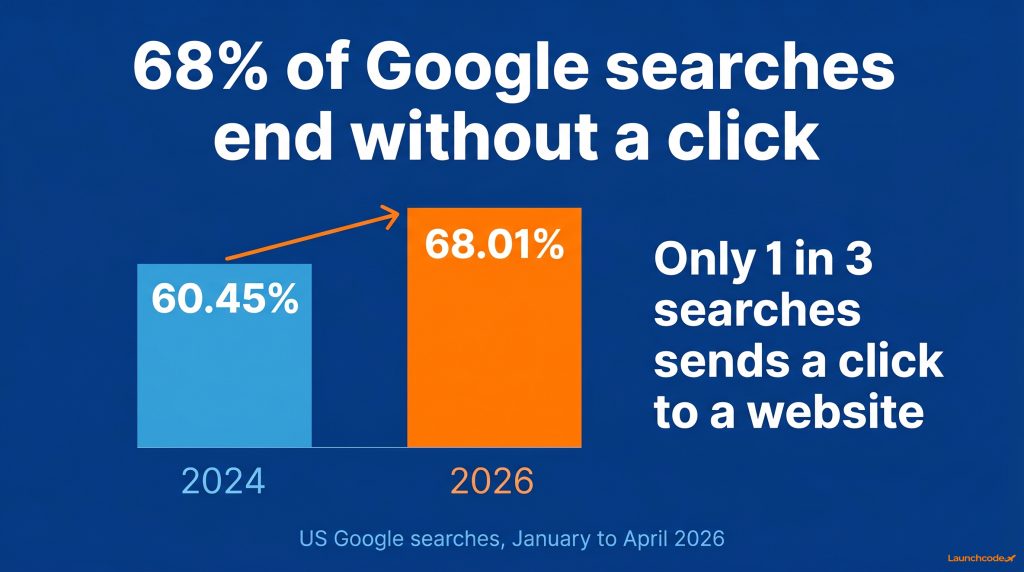
Organic clicks keep shrinking. AI Overviews answer questions before users ever reach a website, and 68.01% of US Google searches ended without a click in early 2026, according to SparkToro's analysis of Similarweb clickstream data. Google's response was not to restore traffic. It was to launch a set of features that reward businesses with loyal audiences.
This article breaks down what Preferred Sources, Search Profiles, and Subscription Linking actually do, who qualifies for each, and what to do if you do not. You will leave with a clear playbook for staying visible in AI-first search, plus the KPIs that should replace raw traffic on your dashboard.
Google stopped paying businesses in traffic and started paying them in visibility. Zero-click searches hit 68.01% in early 2026, up from 60.45% in 2024. Rather than reverse that trend, Google launched Preferred Sources, Search Profiles, and Subscription Linking, three features that amplify content for audiences who already chose a brand.
Ready to grow your organic traffic?
Get a free SEO audit from the Launchcodex team.
The numbers explain the pivot. AI Overviews appear on more than 20% of Google searches, and click-through rates drop nearly 60% when they show up, according to Search Engine Land's coverage of the 2026 zero-click study. AI Mode passed 1 billion monthly users, with query volume more than doubling each quarter per Google's I/O 2026 statements.
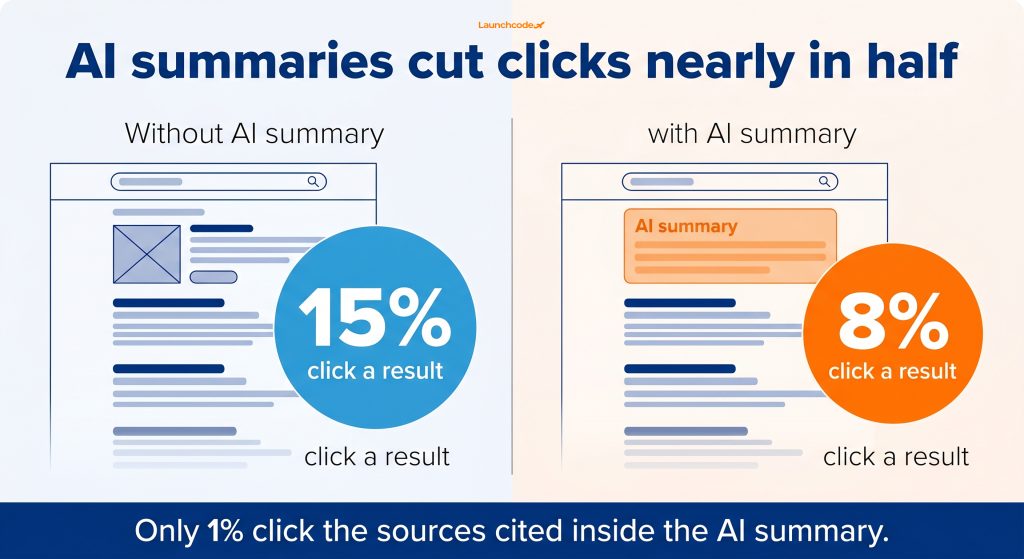
This is not vendor hype. A Pew Research Center study tracking 900 US adults found users clicked a traditional result on just 8% of searches with an AI summary, versus 15% without one. Clicks on sources inside the summary happened only 1% of the time.
News SEO consultant Barry Adams summed up the strategy in his analysis of Google's audience loyalty ecosystem: stop chasing clicks and chase loyalty instead. He wrote it for news publishers. The same logic now applies to any business competing for visibility.
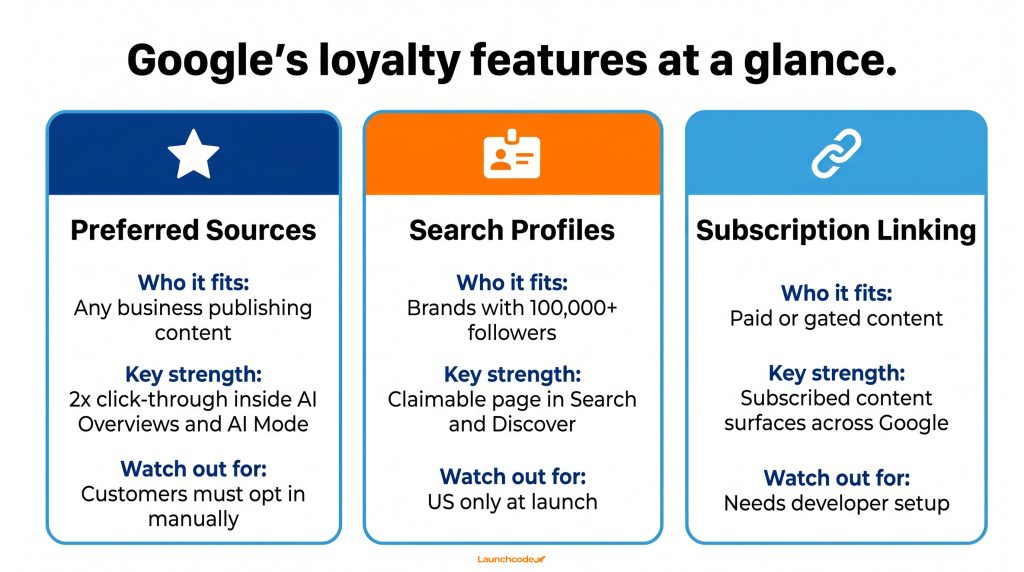
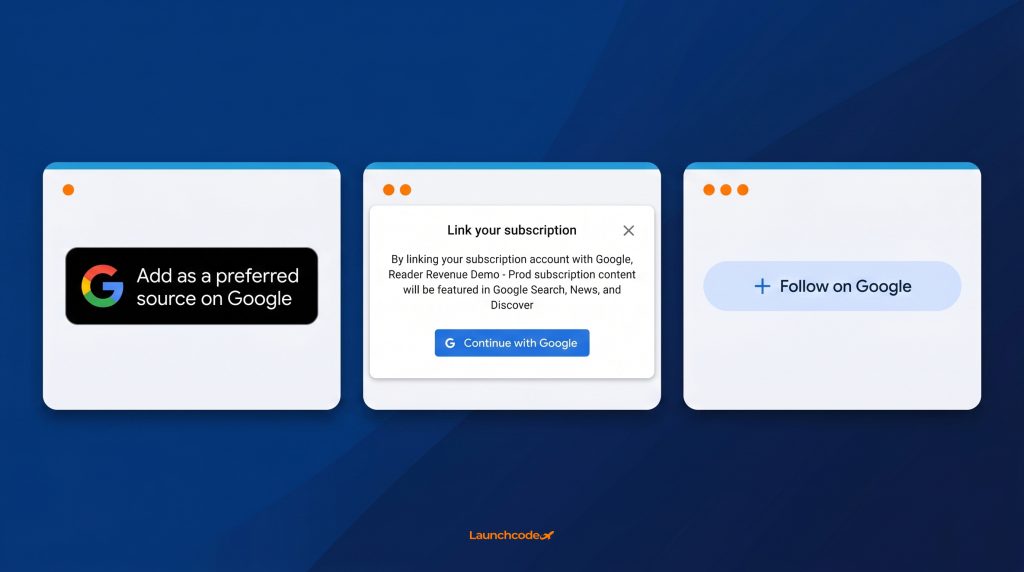
Preferred Sources lets users pick brands to see more often across Search and AI surfaces. Search Profiles gives large creators and publishers a claimable page with a follow button. Subscription Linking surfaces subscribed content in a dedicated panel. Each feature converts an existing audience relationship into extra visibility.
Here is how the three compare for business use.
| Feature | Who it fits | Key strength | Watch out for |
|---|---|---|---|
| Preferred Sources | Any business publishing content | Works in AI Overviews and AI Mode, 2x click-through per Google | Requires customers to opt in manually |
| Search Profiles | Brands with 100,000+ followers | Claimable presence in Search and Discover with follow button | US only at launch, high follower gate |
| Subscription Linking | Businesses with paid or gated content | Subscribed content surfaces across Google surfaces | Needs developer setup |
Preferred Sources launched in August 2025, expanded to all languages in April 2026, then entered AI Overviews and AI Mode on May 27, 2026. Users have selected more than 345,000 sources, up from roughly 90,000 at global expansion, and Google reports preferred links get clicked at twice the rate of other links. Google Search product manager Duncan Osborn said users will "be able to easily spot links in AI responses from the sources you've already selected."
Any business can act on this today. Add the official preferred source prompt to your site, newsletter footer, and post-purchase emails. Each customer who opts in raises your visibility from that point forward.
Search Profiles launched in June 2026 as claimable pages that pull articles, videos, and social posts into one place with a follow button feeding Discover. Per Google's official eligibility documentation, you need 100,000 followers on Instagram, YouTube, or X, or 300,000 on TikTok. That bar excludes most SMBs and even many mid-market brands. The honest read: claim it if you qualify, and focus on the strategy behind it if you do not.
Subscription Linking connects subscriber data to Google accounts, so subscribers see that content highlighted in a "From your subscriptions" panel across Search, Discover, and AI surfaces. For SaaS companies with gated resources or brands with membership content, this makes the email list a direct input to search visibility instead of a retention channel alone.
Loyalty is becoming a ranking input rather than a label. Google confirmed it is working on using Preferred Sources to surface selected brands more often across AI features, according to 9to5Google's reporting. A brand with a base of opted-in customers gains a measurable edge in AI citation selection on relevant queries.
That detail matters more than the badges. 9to5Google reported that Google plans to use preferred status so selected sources appear more often in AI responses rather than only getting highlighted when they happen to show up. Audience loyalty now feeds the same systems that decide which brands AI answers cite.
These features do not fix zero-click pressure. Washington University professor Jacob Montgomery noted readers first see a "summary drawn from sources chosen by the search algorithm" before they ever pick a source. The AI answer still frames the topic. And the features reward brands that already hold loyal audiences. Chartbeat data shows small publishers lost 60% of their search traffic in two years, and these tools offer them little immediate relief.
AI-first visibility extends past one company. ChatGPT web visits grew 84% between September 2024 and March 2026, while Gemini grew roughly 9x over the same period per Similarweb. The brands AI assistants cite win discovery across every platform, which is the core work of generative engine optimization.
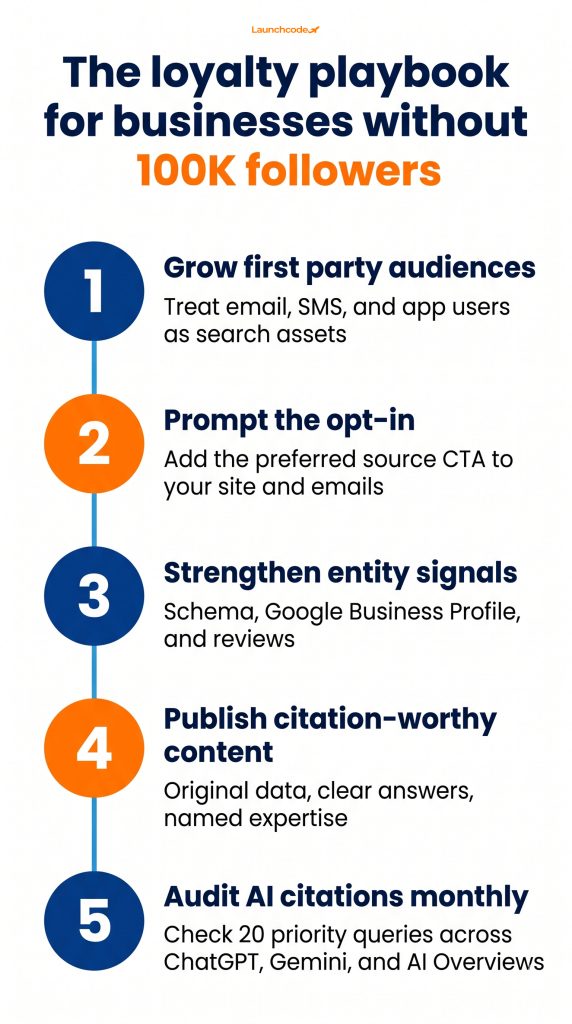
You do not need 100,000 followers to win in a loyalty-first ecosystem. You need an owned audience, opt-in prompts, and a citation-worthy content footprint. Five moves cover it: grow your email list, prompt preferred source selections, strengthen entity signals, publish citable original content, and track AI visibility monthly.
"We run citation audits as a repeatable monthly workflow. Twenty priority prompts across ChatGPT, Gemini, and AI Overviews, results logged in a sheet, every gap converted into a content ticket. The system matters more than any single fix." Derick Do, Co-Founder and Chief Product Officer
Stop grading marketing on sessions. AI referral traffic is small, about 1% of total visits, but it converts better. ChatGPT referrals to ecommerce sites converted 31% higher than non-branded organic search across 94 brands. The right scorecard now tracks return visitors, email growth, opt-in selections, and AI citations.
The Visibility Labs analysis of 94 ecommerce brands found ChatGPT traffic converted at 1.81% versus 1.39% for non-branded organic. Fewer visitors arrive, but they arrive decided.
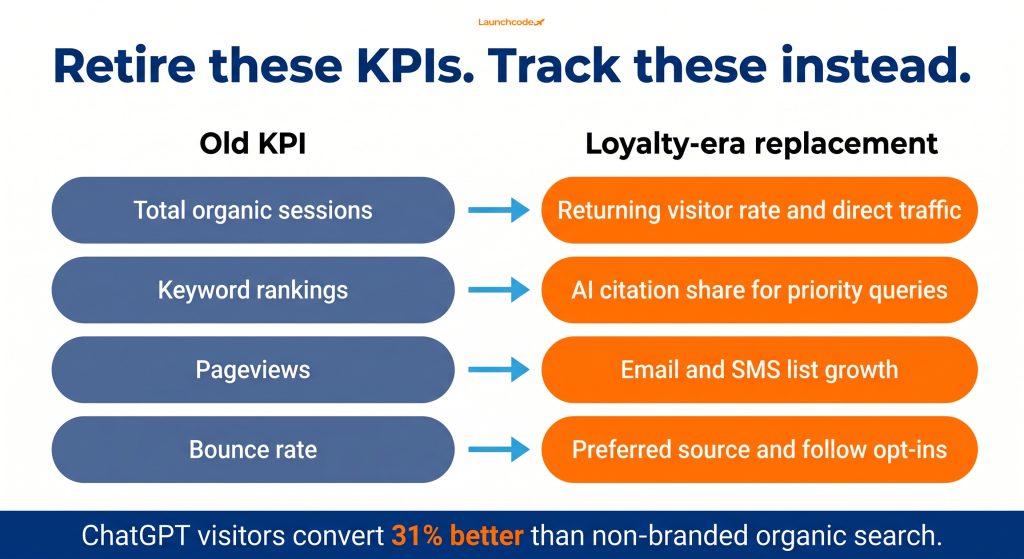
"The first time we moved a client's reporting from sessions to returning visitor rate and AI citation share, the leadership conversation changed within a quarter. We stopped defending traffic dips and started showing pipeline." Tanner Medina, Co-Founder and Chief Growth Officer
| Old KPI | Loyalty-era replacement |
|---|---|
| Total organic sessions | Returning visitor rate and direct traffic |
| Keyword rankings | AI citation share for priority queries |
| Pageviews | Email and SMS list growth |
| Bounce rate | Preferred source and follow opt-ins |
Google made the trade explicit. Loyalty in, visibility out. The businesses that win the next two years will build owned audiences, earn opt-ins, and show up in AI citations across Google, ChatGPT, and Gemini. The ones that keep optimizing for raw clicks will compete for a pool that keeps getting smaller.
Start with one action this week: add a preferred source prompt to your highest-traffic page and your email footer. Then run your first AI citation audit. Both take hours, not months, and both compound from the day you ship them.
Yes. Any business that publishes content can ask customers to add it as a preferred source at Google's preferences page. There is no follower requirement, and selections now influence visibility in AI Overviews and AI Mode.
Only if you have at least 100,000 followers on Instagram, YouTube, or X, or 300,000 on TikTok, and a US account. Google plans to expand eligibility, so revisit the requirements quarterly.
Yes, for quality rather than volume. AI referrals make up about 1% of website traffic, but ecommerce data shows ChatGPT visitors convert 31% better than non-branded organic visitors.
Audit how AI tools describe your brand for your top commercial queries, then publish original, well-structured content that fills the gaps. Consistent schema, reviews, and brand mentions across trusted platforms raise citation odds.




Google now rewards loyalty over clicks. See how Preferred Sources, Search Profiles, and Subscription Linking shape AI visibi...
Google Discover drives more publisher traffic than search. Learn how the feed picks content, the exact image and headline ru...
Learn how hospitals are deploying AI automation to cut documentation time, reduce no-show rates, and improve patient experie...