





How ChatGPT actually picks sources (and other LLMs)
See how ChatGPT, Perplexity, Gemini, and Claude choose which pages to cite, backed by data from Pew, Ahrefs, and Princeton, ...


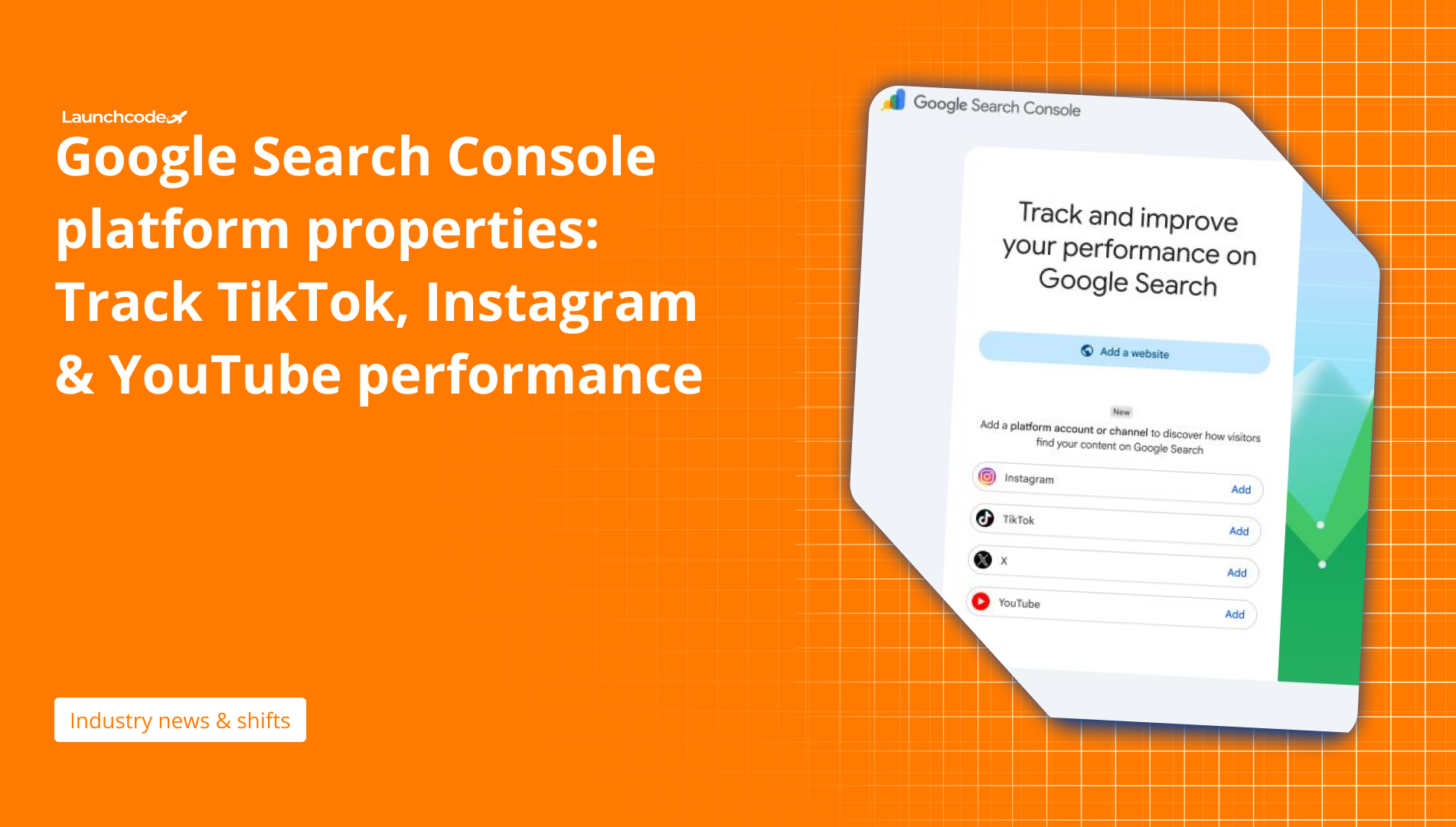


For years, social and video content drove real discovery that never showed up in Google Search Console. A creator could rank on TikTok for a product query and never know it, because Search Console only measured websites. That blind spot mattered more each year as search behavior moved to social feeds.
Google closed part of that gap. This guide explains what platform properties are, how they differ from the 2025 social channels experiment, how to set one up step by step, and how to turn the data into content and revenue decisions. You will finish knowing exactly what to track and what to do with it.
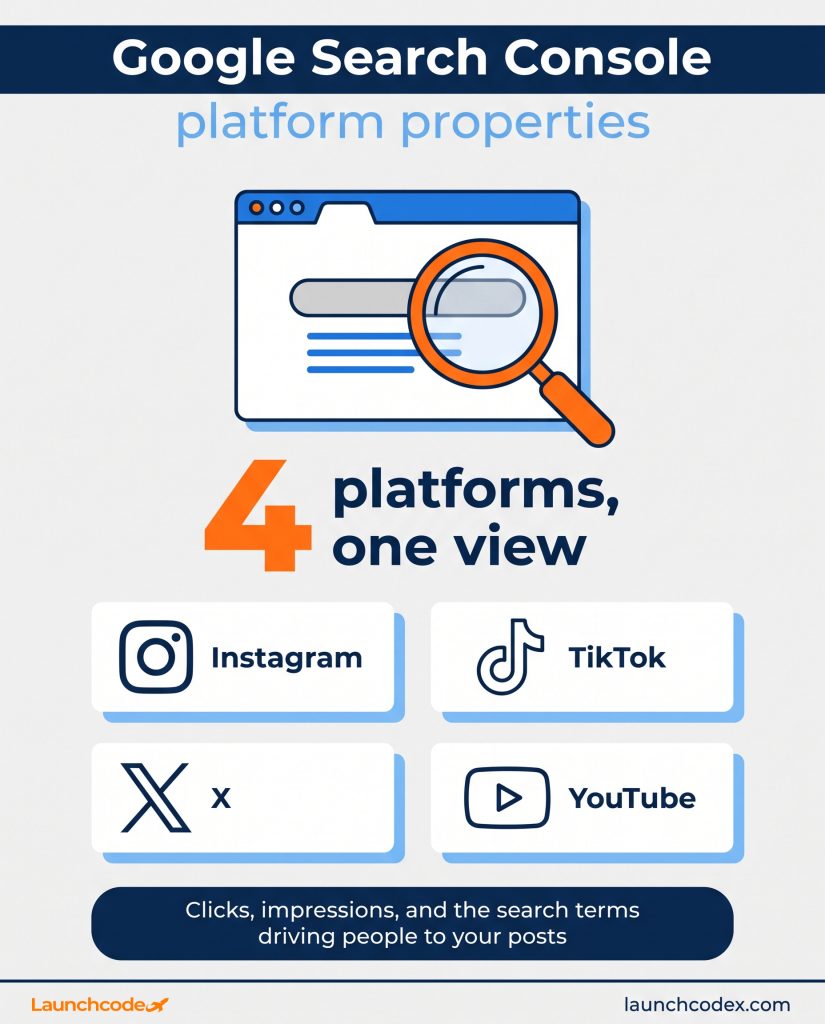
Platform properties are a new Search Console property type for social and video accounts. You verify an Instagram, TikTok, X, or YouTube account, then see how that content performs in Google Search and Discover. The data covers clicks, impressions, and the search terms that lead people to your posts, giving you a single view of off-site discovery.
Ready to grow your organic traffic?
Get a free SEO audit from the Launchcodex team.
Google announced the feature on July 7, 2026, through the Google Search Central Blog. Moshe Samet, Product Manager Lead for Search Console, framed it as a way to help creators and site owners understand how their social and video posts perform, even without a website of their own. The four supported platforms at launch are Instagram, TikTok, X, and YouTube.
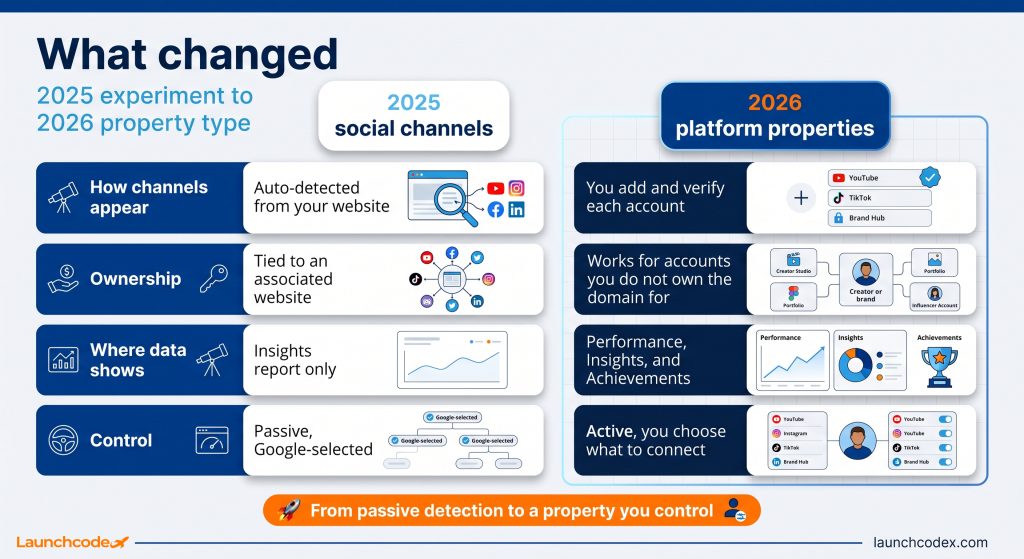
Google tested a smaller version of this idea first. In December 2025, it introduced social channels in Search Console Insights, which automatically detected channels tied to your website and surfaced their data inside Insights. The 2026 version is a bigger step. It is a distinct property type you add and verify yourself.
| Feature | 2025 social channels experiment | 2026 platform properties |
|---|---|---|
| How channels appear | Auto-detected from your website | You add and verify each account |
| Ownership requirement | Tied to an associated website | Works for accounts you do not own the domain for |
| Where data shows | Insights report only | Performance report, Insights, and Achievements |
| Control | Passive, Google-selected | Active, you choose what to connect |
Barry Schwartz of Search Engine Roundtable called out the standout change, noting you can now verify properties that are technically not your domain names. That shift is what makes platform properties useful for creators and multi-brand teams.
The launch covers four platforms: Instagram, TikTok, X, and YouTube. Facebook, LinkedIn, and other networks are not part of this release. If your audience lives on a platform outside those four, this feature will not track it yet, so plan your measurement around the supported set for now.
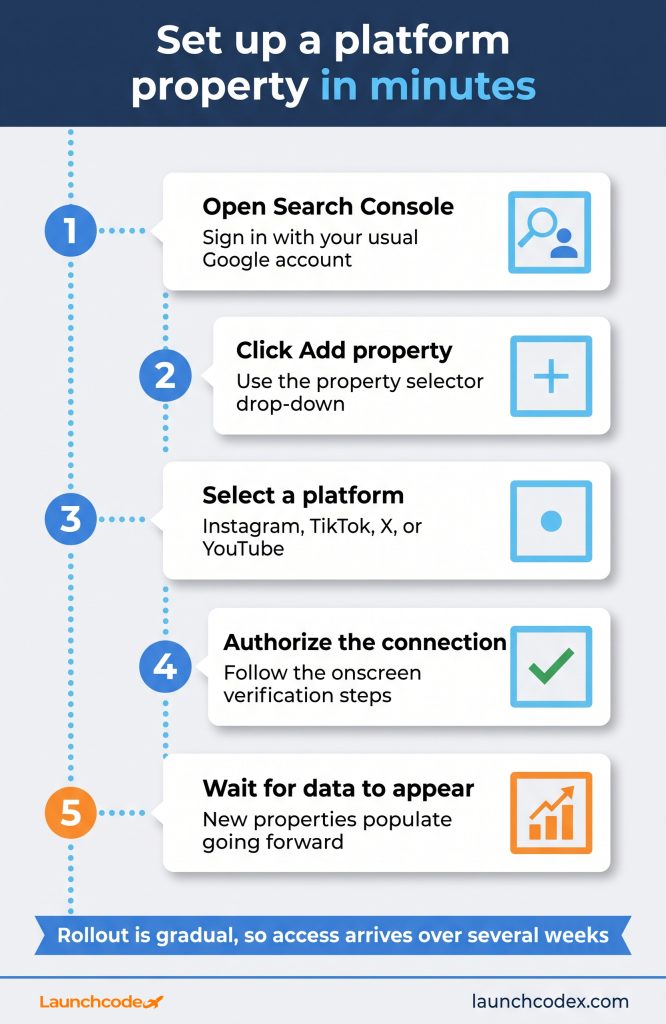
Setup runs through the same property selector you already use for websites. Open Search Console, choose Add property, select one of the four platforms, and follow the onscreen steps to authorize the connection. The process takes only a few minutes. Data then populates over the following days as Google associates your account.
Here is the exact path from Google's documentation:
A few issues trip teams up early. Avoid them and you save days of confusion.
Your social and video data lands in three views. The Performance report shows clicks, impressions, and the search terms driving traffic to your content. The Insights report gives a high-level read on trends, top posts, and how people find your account. Achievements tracks growth milestones, such as passing a new clicks threshold in the last 28 days.
Each view answers a different question, so use them together rather than in isolation.
"We pipe platform property data and website Search Console data into one report, so a client tracks clicks from both surfaces in a single view. Two separate dashboards means two blind spots." Derick Do, Co-Founder and Chief Product Officer
This is the core view for analysis. It shows total clicks and impressions for your posts in Google Search, plus the exact queries that surfaced your content. If a TikTok video ranks for a product question, you see the query, the impressions it earned, and the clicks it drove. That turns social effort into measurable search demand.
Insights is the fast overview. It highlights recent traffic trends, your top-performing posts, and how people discover your account on Google. Use it for a weekly pulse check or to brief a team that does not want to read raw query data.
Achievements tracks growth over time and flags milestones. Reaching a new clicks threshold in the last 28 days is one example. It is a light motivational layer, useful for reporting progress to stakeholders who respond better to clear wins than to spreadsheets.
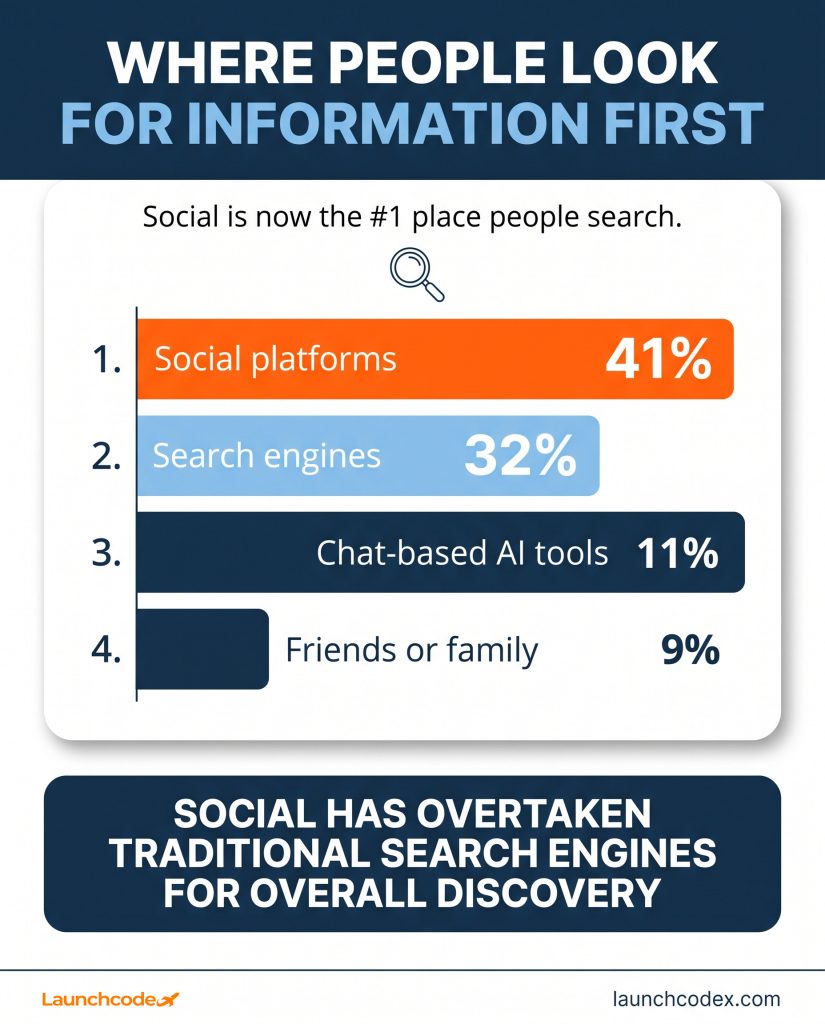
Search moved to social, and the data proves it. Among Gen Z, 41 percent turn to social platforms first when looking for information, ahead of traditional search engines at 32 percent. When your buyers search on TikTok and Instagram before Google, measuring only website rankings hides most of the story. Platform properties close that gap.
The behavior shift shows up across independent research. The Sprout Social Q2 2025 Pulse Survey found that 37 percent of consumers across all age groups now search social platforms first for product reviews and recommendations. Its CMO, Scott Morris, put it plainly, saying social is becoming the new search engine. That reaches revenue directly, since 76 percent of respondents said social content influenced a purchase in the past six months, rising to 90 percent among Gen Z.
A second survey backs the same trend. Data from Forbes Advisor shows 46 percent of Gen Z and 35 percent of Millennials only or primarily use social media for search, roughly double the 24 percent overall average. The same study found 64 percent of Gen Z use search engines for brand discovery, compared with 94 percent of Baby Boomers. Younger buyers rely on Google far less than older ones.
Google now treats a brand as a presence across many platforms, not just a domain. Recent Gen Z marketing data from Hootsuite shows 40 percent of Gen Z have used TikTok to search, and that Instagram and TikTok have overtaken Google for product discovery. If you report only website performance, you undercount discovery and misread which content actually drives demand.
Treat platform property data as a content and demand signal, not a vanity dashboard. Read the queries your social posts rank for, match them against your website content, and close the gaps. When a social post ranks for a high-value query your site ignores, that is a direct instruction for your next piece of content.
This is where measurement becomes action. At Launchcodex, we fold platform property data into a single cross-channel view alongside website Search Console data, so a client sees discovery across both surfaces in one place rather than in separate silos.
"When a TikTok post ranks for a query your website ignores, that gap is your next content brief. We treat the Performance report queries as a ranked to-do list, not a report to admire." Tanner Medina, Co-Founder and Chief Growth Officer
Say a skincare brand finds its TikTok videos rank for "vitamin C serum for beginners" with strong impressions but few website clicks for that term. The brand builds a website guide on that exact query, links it from the video description, and captures both social and search demand. One data point turned into two channels of traffic.
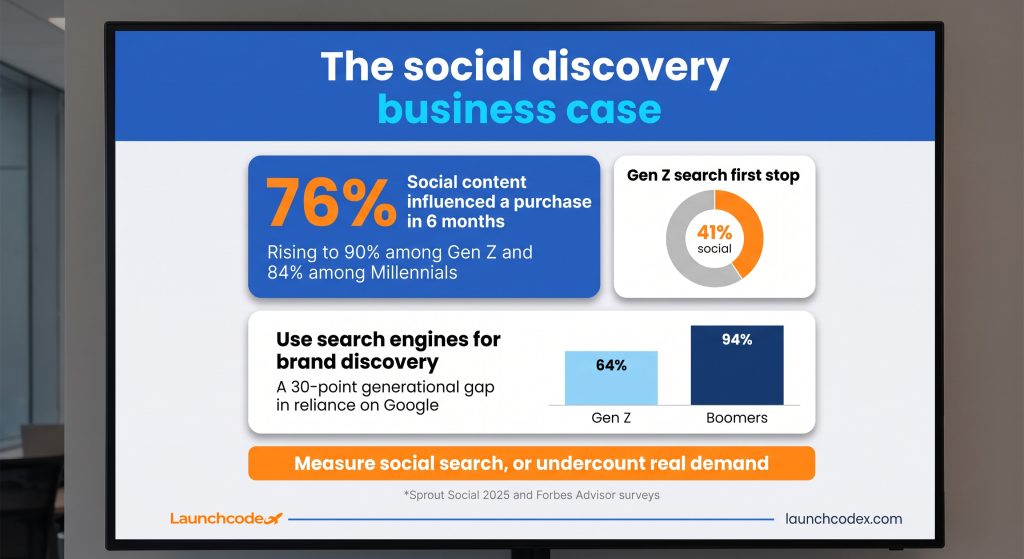
Platform properties give marketers something they have never had inside Search Console: a measured view of how social and video content performs in Google Search and Discover. The behavior data makes the case clear. Buyers search on social first, and the brands that measure it will out-execute the ones that do not. Start by verifying your Instagram, TikTok, X, and YouTube accounts, then read the queries your posts already rank for.
Your next step is straightforward. Add your platform properties this week, give the data time to populate, and run the five-step framework above on your first month of results. If you want help building one cross-channel measurement view, our SEO and GEO team can set the workflow up with you.
They are a new Search Console property type that lets you verify your Instagram, TikTok, X, or YouTube account and see how that content performs in Google Search and Discover, including clicks, impressions, and search terms.
The 2025 version auto-detected channels tied to your website and showed them only in Insights. The 2026 platform properties type is one you add and verify yourself, works for accounts you do not own the domain for, and feeds three reports.
Four at launch: Instagram, TikTok, X, and YouTube. Other networks like Facebook and LinkedIn are not supported yet.
The rollout is gradual over several weeks. If the Add property option does not show your platform choices, wait and check again rather than assuming a setup error.
No. Like website properties, a platform property collects data going forward from the time you connect it, so set it up early to build history.
In three places: the Performance report for clicks, impressions, and queries, the Insights report for trends and top posts, and the Achievements section for growth milestones.




See how ChatGPT, Perplexity, Gemini, and Claude choose which pages to cite, backed by data from Pew, Ahrefs, and Princeton, ...
Google's new Search Console platform properties let you track how your TikTok, Instagram, X, and YouTube content performs in...
Learn the nine-step keyword research process used by growth-focused teams. Covers seed keywords, search intent, keyword diff...