

Share:

AI marketing & automation


Branding now happens across every digital touchpoint. It is no longer limited to a logo or tagline. It builds through repeated interactions on channels such as websites, email, and social platforms, where users form opinions based on consistency and experience.
Psychology plays a clear role. Recognition often comes from repeated exposure and clear positioning across channels, not one campaign. When your message stays consistent across channels like your website, email, and social platforms, you build trust and familiarity that shape buying decisions.
To build a strong presence, your brand message should line up across every channel. This creates clarity for your audience and reduces confusion. Companies that approach branding as a unified system tend to see stronger recall and more repeat customers.
The strongest brands show up consistently across search, content, email, and social, and they measure what works on each channel.
Here are core channels that drive brand visibility:
Search advertising remains central to digital marketing. Reliable industry sources report that paid search accounts for a large share of marketing budgets and performance. At the same time, users spend several hours a day across multiple social platforms, which means brand building requires showing up where those users already spend time.
By investing in these channels, you give your audience more ways to engage, learn, and build trust with your company.
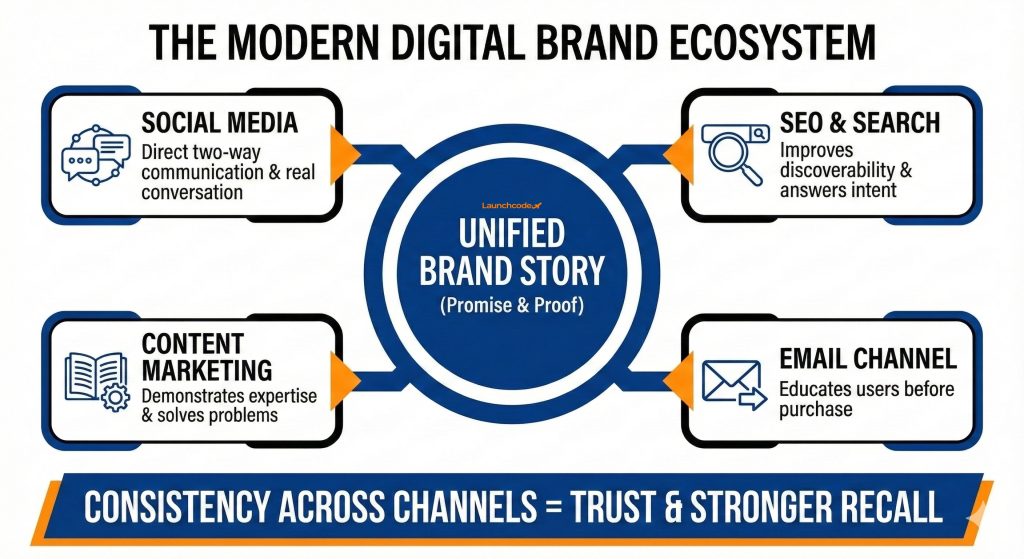
Digital marketing supports branding when every campaign reinforces the same story, promise, and proof.
Practical strategies include:
When brands make decisions based on clear data, they improve alignment between message, channel, and audience. Over time, this creates stronger recall and trust.
Digital marketing shapes how users think about your brand because it controls what they see, when they see it, and how clear your message feels.
Targeted campaigns let you speak directly to specific audiences based on behavior and intent. This creates relevance, which helps users feel like the content fits their needs.
For example:
This consistent presence reinforces credibility. When users repeatedly see helpful content, they start to associate your brand with reliability.
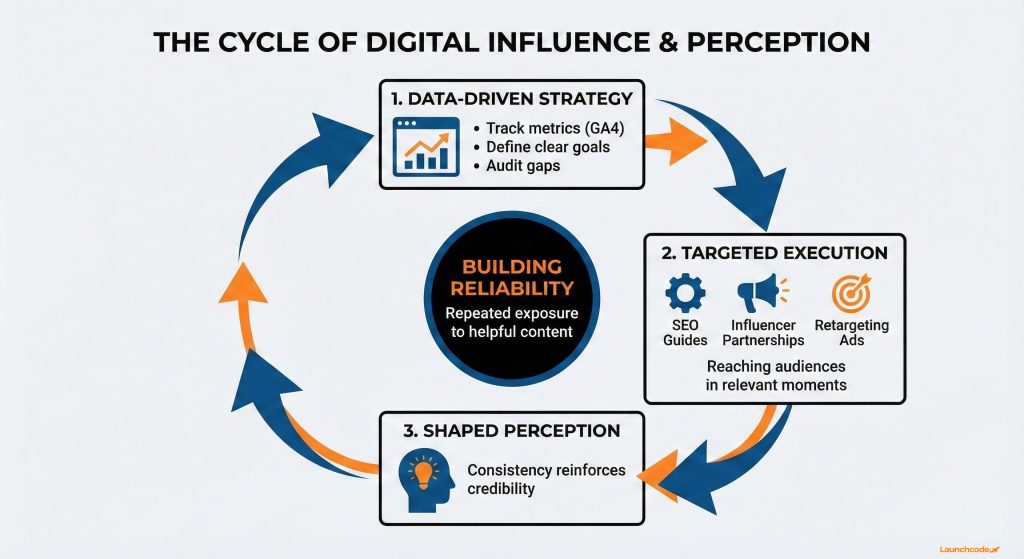
The most effective strategies create helpful content, show proof, and reach audiences in relevant moments.
Three high-impact strategies include:
Industry reports show steady growth in influencer partnerships because audiences respond to trusted recommendations. Meanwhile, strong SEO programs continue to help brands appear when users are researching.
Brands that update content frequently and respond to audience signals tend to see stronger long-term engagement.
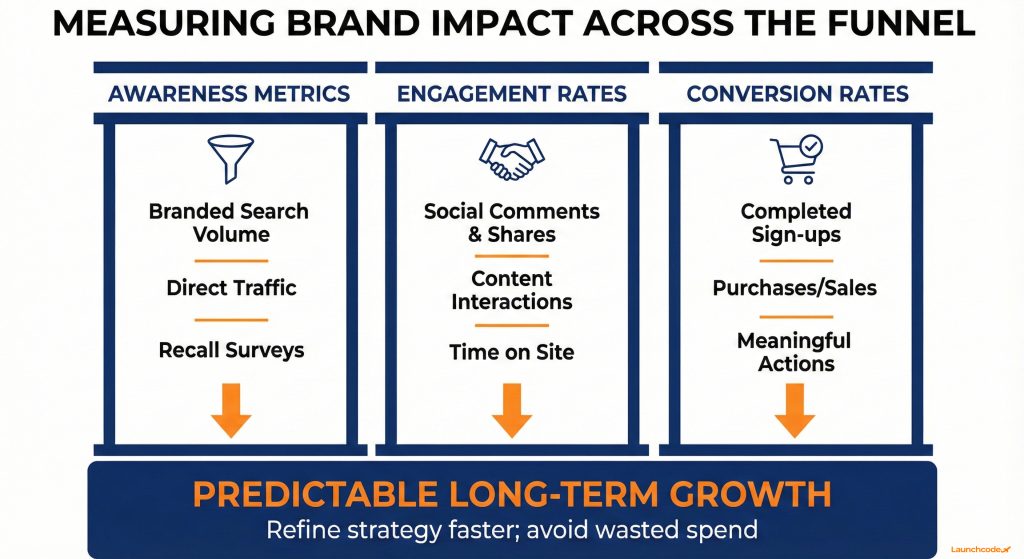
You measure branding impact by tracking awareness, engagement, and conversions across channels in one structured view.
Core metrics include:
Performance media planning frameworks also help teams understand where budget moves the needle most. When companies review these numbers often, they refine strategy faster and avoid wasting spend.
Over time, this process strengthens brand perception and supports more predictable growth.
Digital marketing gives brands tools to shape perception, reach specific audiences, and measure results. Branding gives those same efforts meaning and direction. When both align, companies build recognition, credibility, and loyalty faster.
Social media supports branding by giving customers direct access to your company and your message.
It creates space for two-way communication. Users can ask questions, share experiences, and see how a brand responds. This builds transparency and credibility.
Strong social programs:
When social strategies are clear and consistent, they improve customer loyalty and retention.
Small businesses can use digital marketing to compete by focusing on local presence, trust signals, and consistent messaging.
Practical tactics include:
These actions help small businesses build trust without relying on large advertising budgets. Over time, visibility grows and customers recognize the brand more often.
The biggest risks come from inconsistency and ignoring data.
Frequent issues include:
Brands that fix these issues early tend to see better recognition and stronger long term results.



Real stories from the people we’ve partnered with to modernize and grow their marketing.