Share:

AI marketing & automation


AI is most valuable when it turns messy, manual work into repeatable systems that compound. The five workflows below are battle tested, simple to stand up in tools you already use, and structured with human in the loop controls so quality improves as you scale.
Each one lists triggers, the basic build, guardrails, and the exact metrics to track. Ship one per week and you will feel the lift in cycle time, output quality, and pipeline.
Search no longer stops at blue links. AI overviews, answer engines, and chat-style results assemble information from entities and trusted sources, then present a synthesized answer. Your SEO strategy has to account for that reality. The goal is not only to rank, it is to become the source that models and people rely on. This post breaks down what changed, how to adapt your strategy, where AI helps, and how to execute a safe, measurable plan in 90 days.
Large language models infer meaning across pages, authors, and sources. They reward clarity, structure, and provenance. That changes the game in three ways.
First, queries behave more like conversations. Keyword variations matter less than the underlying entities and relationships. Second, models prefer citable, reference-grade material. Pages that define terms, show methods, and link to credible sources are more likely to appear in AI answers. Third, authority is measured at the cluster level. A single strong page is not enough. You need a consistent body of work that covers a topic from fundamentals to practice.
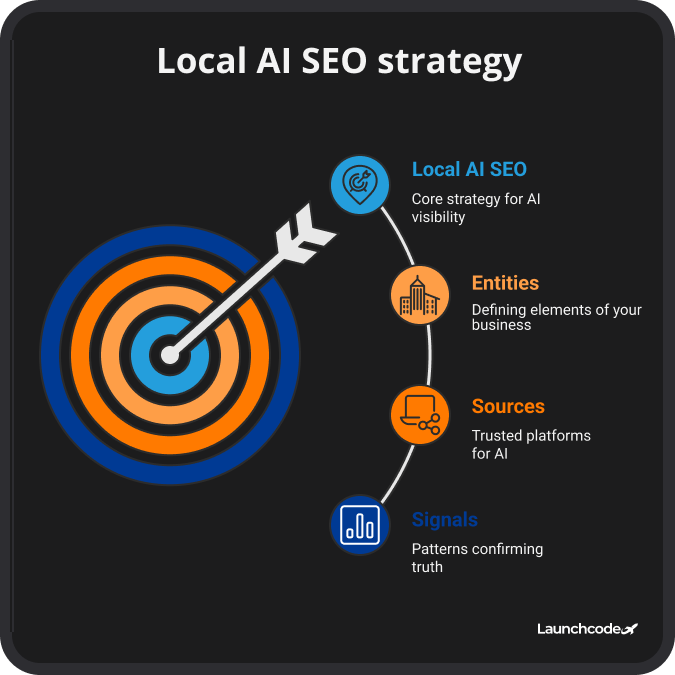
Classic SEO starts with keywords and competitors, then builds pages to rank. Modern SEO starts with entities and sources. Define who you are, what you sell, the problems you solve, and the industries you serve. Map relationships between these concepts, then build hubs and spokes that mirror how buyers think. Support claims with citations. Mark up content with schema. Make authorship real and visible. When entities and sources are clear, rankings and citations both improve.
AI is not a replacement for expertise. It is a force multiplier for research, planning, and production when you add guardrails. Use it to accelerate the work humans do best.
Use AI to cluster queries into topics, label intent, and spot gaps, then validate with GA4 and Search Console. The output is a topical map you can act on. Keep the human in charge of names, definitions, and prioritization so the map reflects your market.
Prompt starter
“Cluster these queries into topics and subtopics. For each cluster, give the searcher intent, common entities, and three missing angles we should cover. Return a table. Queries, {paste_list}.”

AI can suggest hub and spoke structures from your entity list, propose breadcrumbs, and recommend internal links that reflect real relationships. You approve the model’s plan, then implement consistently so click depth drops and context improves.
Prompt starter
“Using this entity inventory, propose a hub and spoke structure with URL patterns, breadcrumbs, and cross links. Entities, {paste}. Goals, shallow click depth and clear relationships.”
Let AI draft briefs, outlines, and first-pass copy that follows your message architecture. Require citations and note where expert review is needed. Final content must be edited by subject matter experts. Store prompts, style rules, and evaluation checks in your repo so quality is repeatable.
Prompt starter
“Create a content brief for the entity {entity}. Primary keyword {keyword}. Audience {persona}. Include headings, questions to answer, five credible sources, internal link targets, and schema notes. Keep it factual and cite every claim.”
AI helps parse crawl exports, server logs, and Core Web Vitals data. It can summarize patterns, point to slow templates, and suggest fixes. It can also generate draft JSON-LD from page context. Engineers still implement changes, and everything is validated with real tests.
Prompt starter
“Review this CWV export. Identify the templates with the biggest LCP and CLS impact, list likely causes, and propose fixes with estimated effort. Data, {paste_rows_or_link}.”
AI cannot read your analytics for you, but it can help monitor AI surfaces. A lightweight scraper or manual tracker plus a model summary gives you trends on AI overview appearances, citation share by topic, and pages most likely to be cited. Report these next to classic SEO KPIs.
Prompt starter
“Summarize this month’s AI overview tracker. Show appearances and citation share by topic. Call out the top three queries to target with new or refreshed spokes. Data, {paste_table}.”
If you want AI to cite you, make it easy to trust you. Publish an entity inventory with definitions and aliases. Create author pages that prove expertise with credentials and links to real profiles. Document methods on research pages. Add references and dates so freshness is obvious. Keep schema valid and consistent with page content. These signals are simple to maintain and they compound.
Links still matter, but spray and pray is obsolete. Publish material that becomes a reference, not a pitch.
Distribute through associations, standards bodies, and respected publishers. Contribute bylined pieces that point back to your hubs. These citations help both rankings and AI answers.
Your pillars read like reference pages with methods and sources. Spokes answer specific questions and link back to hubs. Author pages prove expertise. Internal links mirror meaning, not convenience. Schema is valid and consistent. Your dashboard shows rising visibility and citations in the topics that matter. Sales reports more qualified conversations because buyers found you earlier in their research.


Real stories from the people we’ve partnered with to modernize and grow their marketing.