
Share:

AI marketing & automation


Most med spas spend heavily to fill the calendar with first-time patients, then watch a large share never come back. The problem is rarely the treatment. It is the silence after it. A patient leaves happy, the result fades on schedule, and no one reaches out at the moment they are ready to rebook.
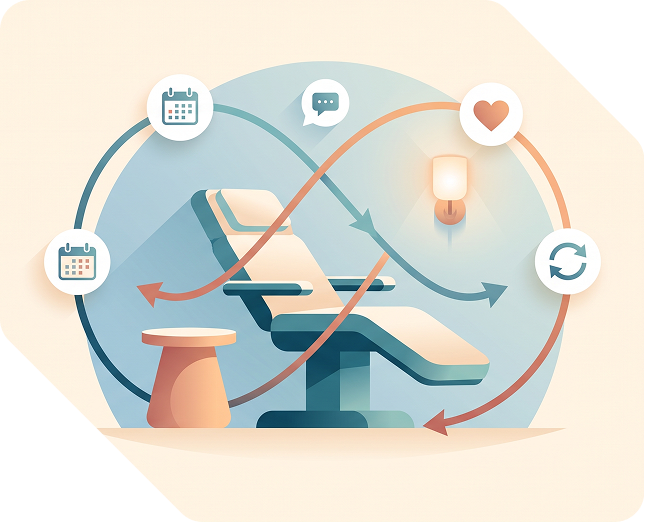
This article fixes that with two connected systems. A loyalty program gives patients a reason to return. Lifecycle marketing tells them exactly when, based on how their treatment wears off. You will get program models, a treatment cadence map, a channel plan, the compliance rules that protect you, and the metrics that prove it works.
Repeat visits are the most profitable revenue a med spa can earn. Acquiring a new patient costs about five times more than keeping an existing one, and lifting retention by 5% can raise profits by 25% to 95%, according to the American Med Spa Association. With the average med spa already running near full capacity, the next dollar is easier to find in your patient list than in ad spend.
The math gets sharper at the average location. AmSpa reports the average med spa generated about $1.4 million in 2024, up from $1.3 million the year before. Move each active patient from two visits a year to three, and that is a meaningful revenue jump with no added acquisition cost.
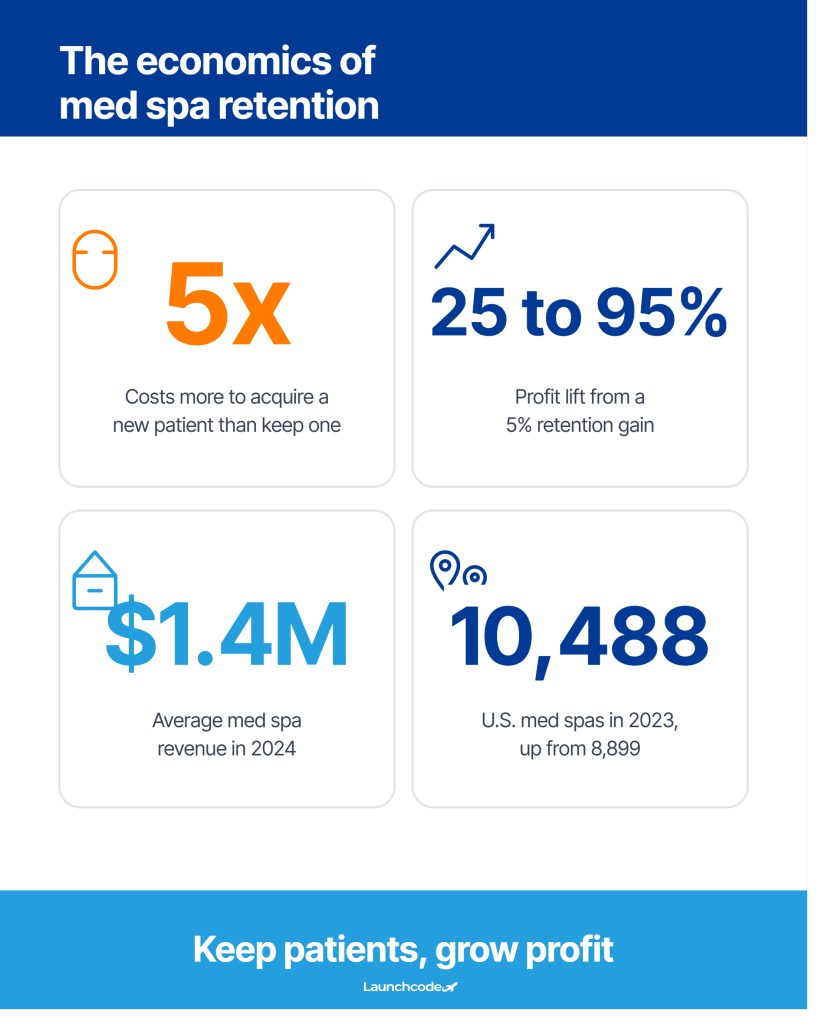
The market is filling up. The number of U.S. med spas grew from 8,899 in 2022 to 10,488 in 2023, and most are single-location businesses chasing the same local patients. As acquisition costs climb, the spas that defend their existing base win.
Three mistakes quietly drain repeat revenue:
“We see it in the data on almost every new account. The retention leak is bigger than the acquisition problem, and it costs nothing to send a well-timed message to a patient you already earned.” Tanner Medina, Co-Founder & Chief Growth Officer
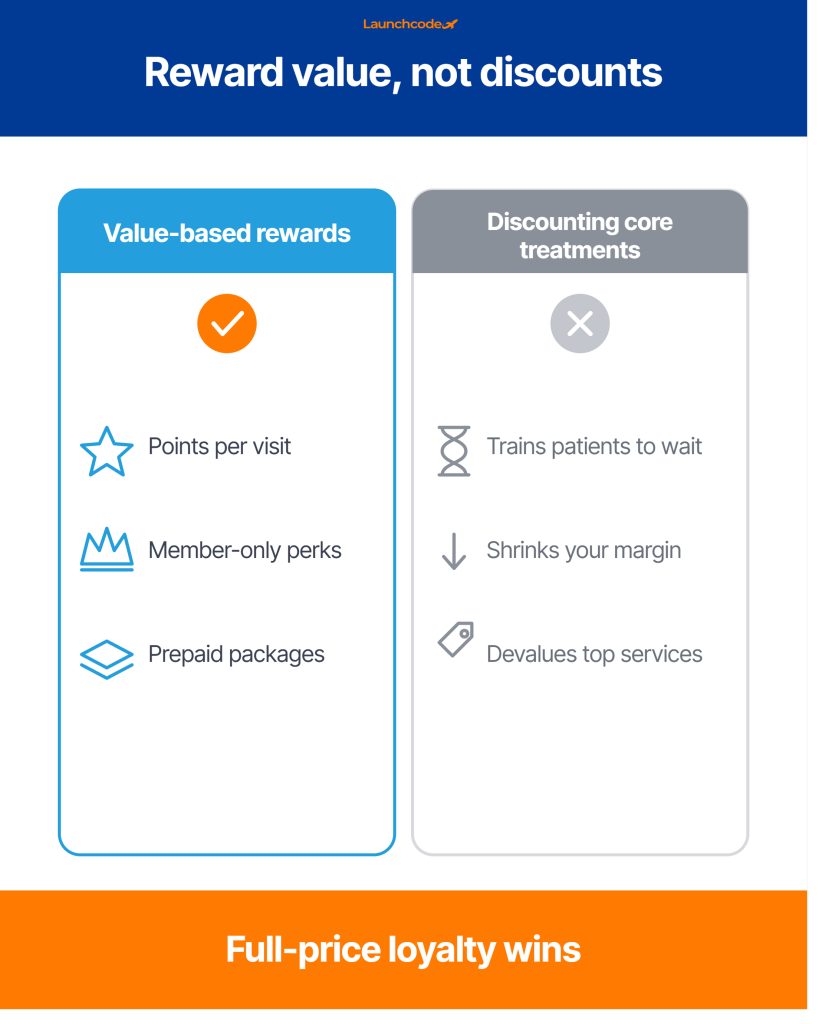
The best med spa loyalty programs reward continued care, not discounts on it. A points-per-visit system, a tiered structure, or a paid membership all work because they add value and build routine. Cutting the price of your neurotoxin to win loyalty does the opposite. It teaches patients to delay until the next sale and shrinks the margin on your most popular service.
Loyalty in aesthetics differs from retail. Patients pay cash, visit on a medical cadence, and choose providers they trust. A program should reinforce that trust and reward the behavior you want, which is consistent maintenance at full price.
| Model | Who it fits | Key strength | Watch out for |
|---|---|---|---|
| Points per visit | Spas with varied service menus | Simple to join, rewards frequency | Can feel slow if thresholds are too high |
| Tiered membership | Spas with a loyal core base | Status perks drive higher spend | Tiers must offer real, visible value |
| Paid monthly membership | Spas wanting recurring revenue | Predictable income, built-in routine | Pricing must balance value and margin |
| Prepaid treatment packages | Injectable and series-based spas | Locks in future visits and cash flow | Track usage so credits get redeemed |
| Referral rewards | Spas with strong word of mouth | Brings in pre-trusted new patients | Reward the referrer with value, not cash |
A paid membership is the strongest structural retention tool because it converts irregular visits into monthly billing and a standing reason to return. Charge a fixed monthly fee that includes a service or credit, then add member-only perks like priority booking or a quarterly add-on. The data backs the model. Beauty and wellness businesses built on memberships and expansion grew at 5% in 2024, against 2% for the category overall.
Reward perks that protect margin include:
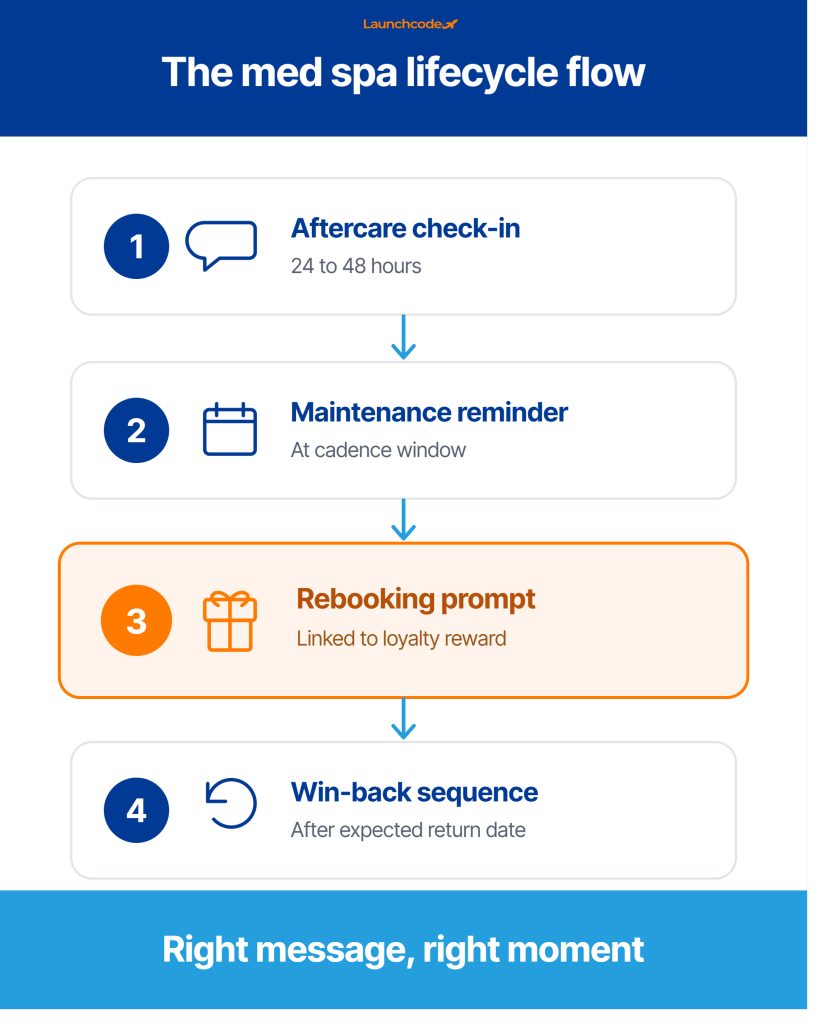
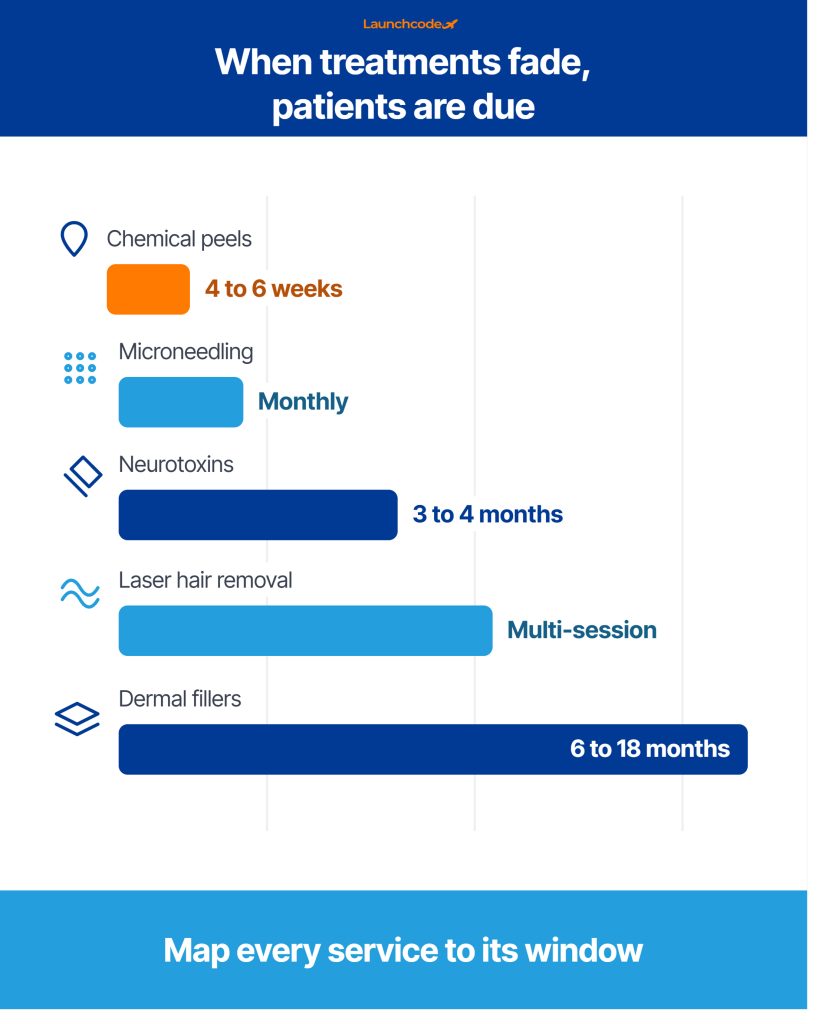
Lifecycle marketing means sending the right message at the moment a patient is ready for it, set by how their treatment fades. Neurotoxins typically last three to four months, so a patient who got Botox in January is due in April. Reach out at week ten with a timed reminder and you capture the rebooking. Silence loses it.
This is the gap most med spas leave open. They build a loyalty program, then never tell patients when to use it. Treatment cadence solves the timing problem for you, because the biology is predictable. Your job is to map each treatment to its rebooking window and trigger a message automatically.
| Treatment | Typical result duration | When to reach out |
|---|---|---|
| Neurotoxins (Botox, Dysport) | 3 to 4 months | Week 10 to 12, before movement returns |
| HA dermal fillers | 6 to 18 months by product and area | About one month before expected fade |
| Light to medium chemical peels | 1 to 2 months | Series every 4 to 6 weeks |
| Microneedling | Monthly series | Reminder at week 3 to 4 |
| Laser hair removal | Multi-session series | Book next session before leaving |
Chemical peels show how series-based treatments compound. Clinics commonly advise that light and medium peels be repeated every four to six weeks, which means a single peel should never end without the next one scheduled.
A working lifecycle system runs on a few automated sequences:
Personalization is what makes these land. A Georgia Southern University study found that a personalized experience makes 60% of customers more likely to return. A message that names the treatment and the timing beats a generic “we miss you” by a wide margin.
“When we wire the booking record to the message, a patient’s last service and date trigger the next text on their cadence. One aesthetics client moved rebooking from manual guesswork to automated, and staff stopped tracking it by hand.” Derick Do, Co-Founder & Chief Product Officer
This is the kind of treatment-data-driven automation Launchcodex builds for aesthetics clients. Our AI automation systems connect the booking record to the message so the cadence runs on its own.
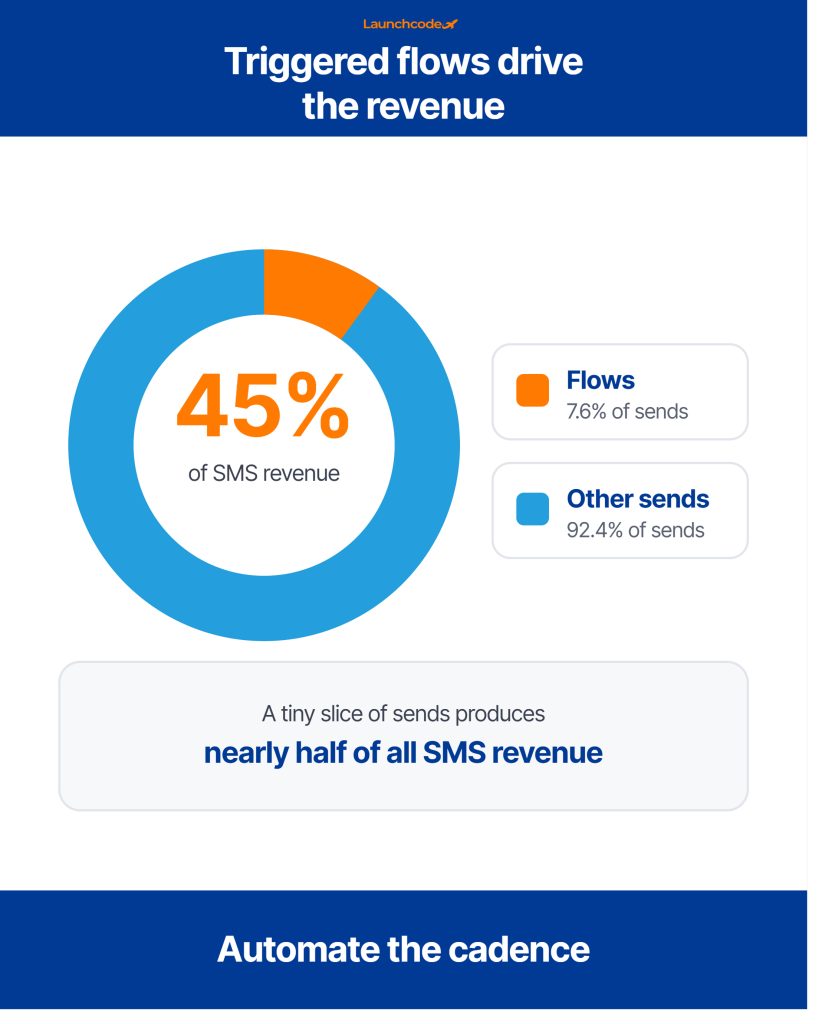
A monthly newsletter to your whole list is not lifecycle marketing. Triggered, behavior-based messages outperform broadcasts by a wide margin. On SMS, flows make up just 7.6% of sends but drive 45% of SMS revenue. The same logic applies to email. Build sequences tied to actions and dates, not one-size blasts.
Use SMS for time-sensitive, personal nudges and email for education and value. SMS earns attention fast, with click rates that commonly run 18% to 35% and reminders that cut no-shows by about 38%. Email carries depth and frequency without fatigue, with average open rates near 43% in 2025. The two work best as one system, not a choice between them.
That same MailerLite data shows beauty and personal care sits among the lowest email click rates, near 0.95%, because inboxes in this category are crowded. That raises the bar for relevance. Generic offers get ignored. Treatment-timed messages get opened.
| Message type | Best channel | Why it fits |
|---|---|---|
| Aftercare check-in | SMS | Immediate, personal, read within minutes |
| Cadence rebooking nudge | SMS | Time-sensitive, drives a quick action |
| Educational content and tips | Room for depth, builds trust over time | |
| Membership value recap | Reinforces what the patient is getting | |
| Win-back for lapsed patients | Email, then SMS | Layered reach for harder-to-move patients |
| Limited slots or events | SMS | Urgency performs best in a text |
Spas that only email lose the rebooking that needed a same-day text. Spas that only text exhaust a channel meant for high-value moments. Pair them. A well-run email and SMS program uses email to stay present and SMS to convert at the exact cadence window.
Marketing texts to patients almost always require prior express written consent under the TCPA, and a HIPAA authorization does not satisfy that requirement. The two rules are separate. A phone number on an intake form is not enough for promotional texts. You need a clear, documented opt-in that names your business and describes the messages, plus an easy way to opt out.
Most med spa retention advice skips this section, and the risk is rising. TCPA litigation jumped 95% in 2025, and the law gives individuals the right to sue directly. For a health-adjacent business texting patients, that exposure is real.
The distinction matters because marketing messages carry the higher consent standard. TCPA attorney Christine Reilly offers a clean test: if a message is not truly informational or transactional, treat it as marketing. An appointment confirmation is informational. A text suggesting a complementary treatment is marketing, even when it sounds helpful.
This is general guidance, not legal advice. Rules shift through FCC rulemaking and court interpretation, so verify your setup with a compliance professional.
Three numbers show whether your loyalty and lifecycle system is moving repeat visits: rebooking rate, retention rate, and patient lifetime value. Rebooking rate is the fastest signal, because it measures how many patients book their next visit before leaving. Retention rate confirms they actually return, and lifetime value translates both into revenue you can bank.
Without measurement, you are guessing. With it, you can see which flows drive returns and which offers fall flat. Track these from your practice management or EMR system so the data stays tied to real treatment records.
Open rates and click rates are inputs, not outcomes. A flow with a strong open rate that does not move rebooking rate needs a better offer or better timing. Judge the system by visits booked and revenue retained, then adjust the messages that feed those numbers.
The spas that grow treat each first visit as the start of a schedule. They reward continued care instead of discounting it, they message patients at the exact moment a treatment fades, they match SMS and email to the job each does best, and they stay compliant while doing it.
Start with one move this week. Map your top three treatments to their rebooking windows, then set a single timed reminder for your most popular service. Add a value-based loyalty reward to give patients a reason to act, measure rebooking rate before and after, and build from there. The patients are already on your list. A timed, trustworthy system is what brings them back.
Loyalty rewards, treatment-timed flows, consent records, and retention metrics only work when they share the same data. Launch Portal brings them together in one system, so a patient’s last treatment and date trigger the right message on their cadence, memberships and points track automatically, opt-ins stay documented, and rebooking rate and patient lifetime value show up in a single dashboard. See how Launch Portal can turn your patient list into predictable repeat revenue.
A paid membership or a points-per-visit program usually works best, because both reward routine without discounting core treatments. Memberships add predictable monthly revenue. Avoid price cuts on popular services, since they train patients to wait for the next deal.
Time it to the treatment. For neurotoxins, reach out around week ten to twelve, before movement fully returns. For peels and series treatments, schedule the next session before the patient leaves. The goal is to prompt them just before the result fades.
Both, used for different jobs. SMS wins for time-sensitive rebooking nudges and aftercare, because it gets read fast. Email wins for education, value recaps, and frequency. Pair them so email keeps you present and SMS converts at the cadence window.
Only with proper consent. Marketing texts generally require prior express written consent under the TCPA, which is separate from any HIPAA authorization. Collect a clear opt-in, include opt-out instructions, honor STOP requests, and confirm your approach with qualified legal counsel.
Focus on rebooking rate, retention rate at 90 days and one year, and patient lifetime value. Rebooking rate is the earliest signal. Rising retention and lifetime value confirm the loyalty and lifecycle system is producing real repeat revenue.


Real stories from the people we’ve partnered with to modernize and grow their marketing.