
Share:

AI marketing & automation


For two years, businesses had no native way to chat with customers on Google. Google removed the messaging feature in July 2024 and told owners to use WhatsApp, SMS, or third-party tools. Many local businesses lost an easy lead channel and never replaced it cleanly.
That gap is closing. Google is rebuilding Business Profile messaging around an AI agent that answers customer questions, pulls from your profile and website, and hands the chat to a person when it needs you. This article explains what is real, what is still in pilot, who qualifies today, and the steps to get your profile ready before this reaches your market.
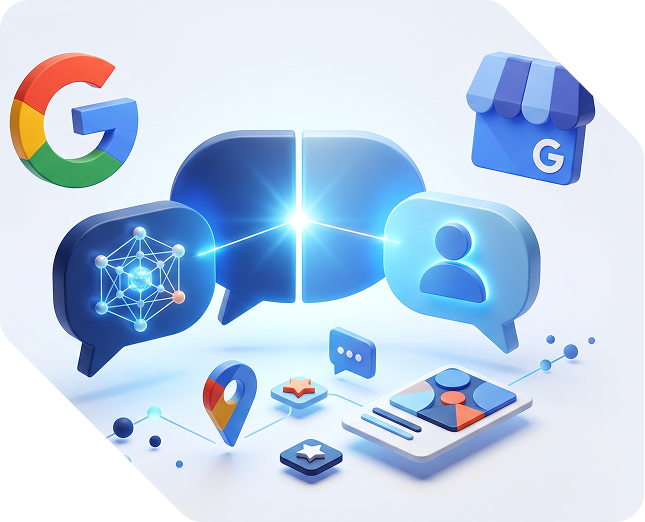
Google is bringing native messaging back to Business Profile as an AI chatbot. The old chat closed in 2024. The new version answers customers automatically, works inside the profile, and routes complex questions to a human. It runs on Google Business Agent and RCS Business Messaging, which makes it far more capable than the lightweight chat Google retired.
The story only makes sense with the timeline. Google did not tweak a setting. It removed the feature, then rebuilt it on stronger infrastructure.
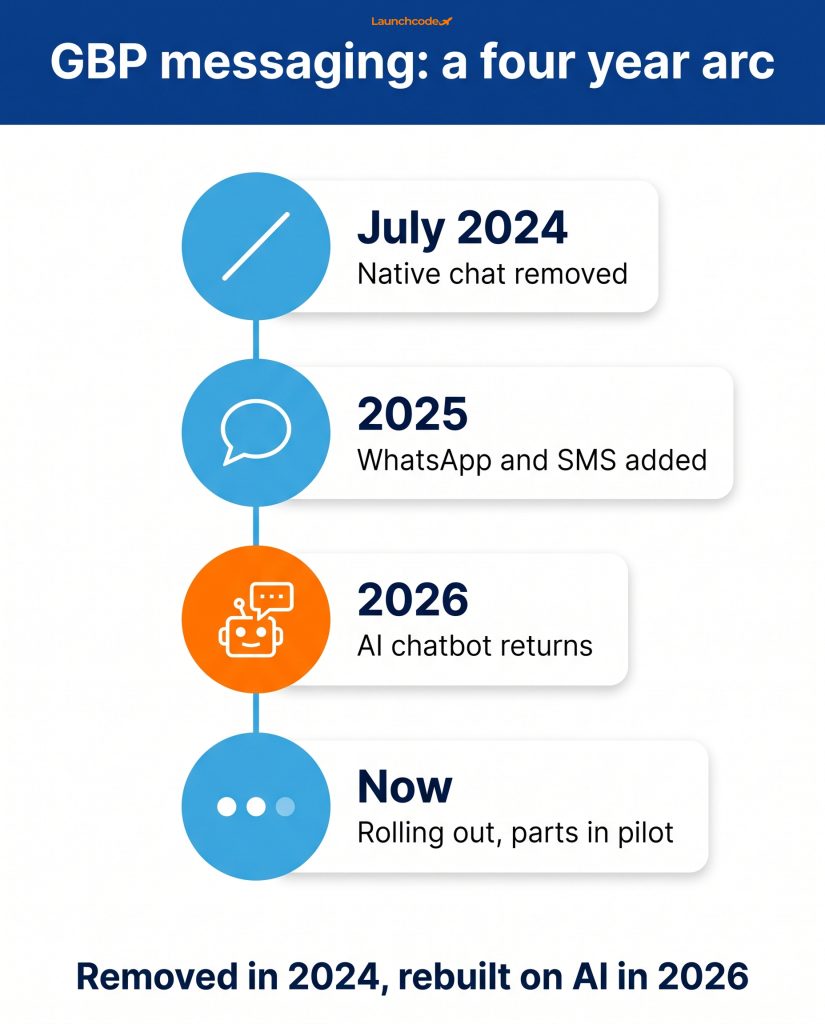
Google ended chat and call history on Business Profile, with new chats stopping on July 15 and the feature closing on July 31. You can confirm the dates in Google’s own help documentation. On the developer side, Google also discontinued the API behind the old chat, Google Business Messages, which shows the shutdown was structural and not a minor change. After the sunset, Google pointed eligible businesses to WhatsApp and SMS to keep talking to customers.
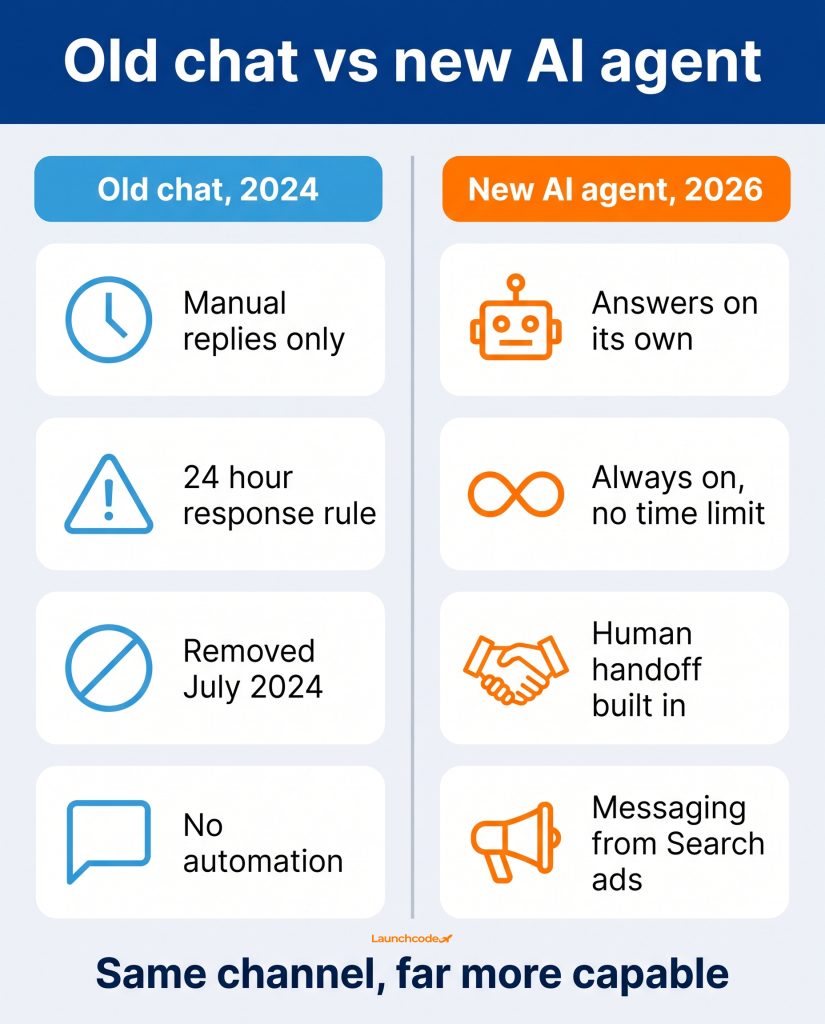
The new feature is not the old chat repainted. It is built on RCS for Business, which supports verified sender badges, rich media, read receipts, and analytics across Android and iOS. That foundation is why the AI agent can do far more than the 2024 version, and why the return is worth your attention.
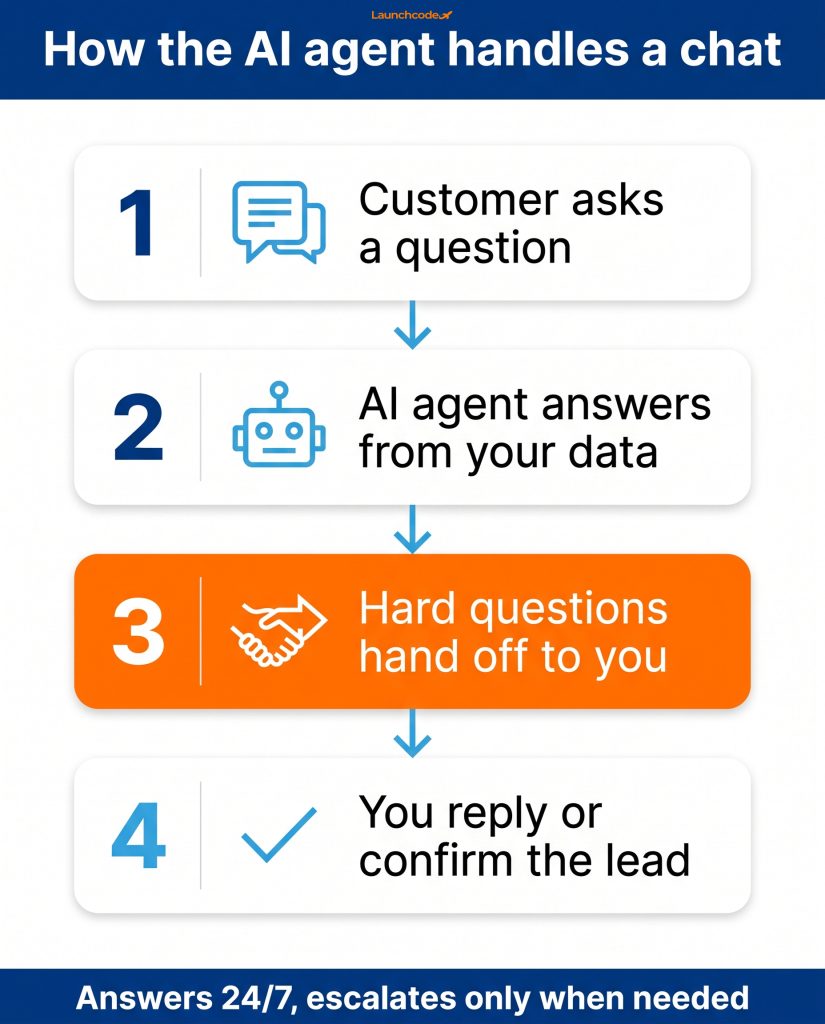
The new messaging experience uses an AI agent that answers customer questions on its own, then hands the chat to you when it hits something it cannot handle. Inside the profile, messages now split into what needs your attention and what the agent already handled. You set the welcome message, the conversation starters, and the point where a human takes over.
The main change is autonomy. The agent works around the clock, so a customer at 9 pm gets an answer instead of becoming a missed lead.
When the Launchcodex SEO team reviewed the new merchant experience, the Messages button opened four tabs rather than a simple inbox:
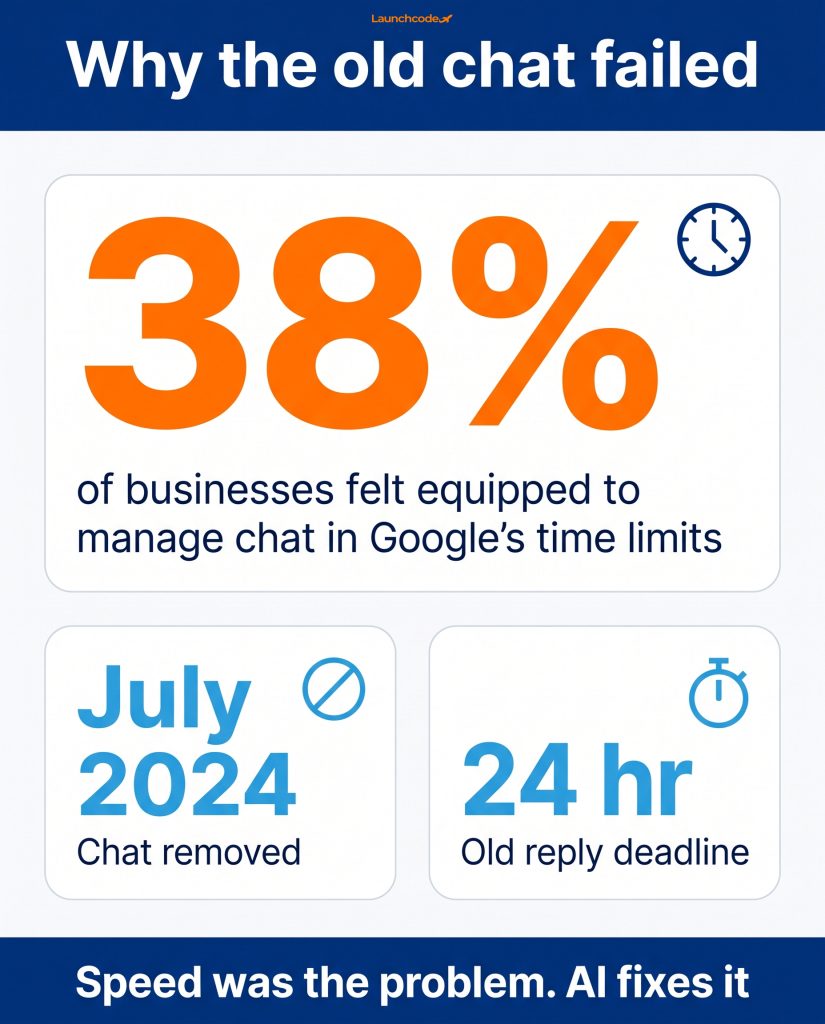
The handoff is the part that fixes the old chat. Google’s Brand Profile documentation confirms the agent supports a support handoff, where you add contact details so a person can step in. This addresses the real reason the old chat failed. A Forrester and Google report found only 38 percent of businesses felt equipped to manage chat inside Google’s response time rules, a stat reported in Vendasta’s breakdown of the chat shutdown. An always-on agent removes that pressure.
The agent answers based on the data you give it. For the retail version, Google uses Gemini models to read your Merchant Center product data and your website, then replies to questions like whether a product runs true to size. For local businesses, the same logic applies to your profile fields, services, hours, and reviews. Thin data produces weak or wrong answers.
This makes answer quality your responsibility, not Google’s. The agent is only as accurate as the information behind it.
“We treat the agent like any system. Garbage in, garbage out. Before we switch one on for a client, we load the website FAQ and service descriptions so it has a clean source for the top 20 questions customers actually ask.” Derick Do, Co-Founder & Chief Product Officer
Teams that turn this on without prep tend to make the same mistakes:
The fix is simple. Treat the agent as a new employee who only knows what you wrote down. Give it clean, specific, current information before it talks to a single customer.
The Promote tab turns messaging into an ad channel. Google’s label says you can launch ads in a few clicks so customers message you directly from Search results. That makes the AI agent a conversion surface, not only a support tool. A customer can move from an ad to a live conversation with your agent without filling out a form or waiting for a callback.
This is the most strategic piece for marketers, because it changes how a Search ad performs.
“Speed is the conversion lever here. When we cut a roofing client’s first reply time from hours to under a minute with an always-on agent, booked jobs from the same Search budget climbed. The ad did not change. The response time did.” Tanner Medina, Co-Founder & Chief Growth Officer
Picture a roofing company running a Search ad for storm repair. Today, the click sends the customer to a landing page and a form. With the Promote tab, the same click can open a chat where the agent confirms the service area, answers a price range question, and books the lead before a competitor calls back. Faster replies usually mean more booked jobs from the same ad spend.
This ads connection is in pilot for select advertisers, so treat it as a near-term opportunity rather than a feature you can switch on everywhere today.
Access depends on which version you mean. The retail Business Agent is rolling out in the US for qualifying e-commerce brands. The local profile messaging view with four tabs appears to be in pilot, and the ads handoff is limited to select advertisers. WhatsApp and SMS from the profile have been available since 2025. Check your own dashboard, since rollout is uneven.
The eligibility rules matter most for the retail version. To customize Business Agent today, Google’s documentation lists clear requirements.
| Capability | Status now | Who it fits |
|---|---|---|
| Retail Business Agent | Rolling out in the US | E-commerce with a verified Merchant Center account and at least 50 approved free listings |
| Local profile messaging, four tabs | Appears to be in pilot | Limited accounts, not broadly available |
| Messaging from Search ads (Promote) | In pilot for select advertisers | Advertisers in the test group |
| WhatsApp and SMS from the profile | Live since 2025 | Eligible profiles |
If you run a service business, the retail eligibility rules likely exclude you for now. That is normal at this stage. The local version is clearly being tested, so the right move is to prepare rather than wait.
The data that powers the chatbot is the same data that powers AI search. Your profile fields, reviews, services, and hours feed your messaging agent, your Maps results, and AI-generated answers. Strong profile data pays off in three places at once, so this is not a side feature. It is part of the larger shift to AI-driven discovery.
Customer behavior already moved in this direction. Fewer searches reach your website at all.
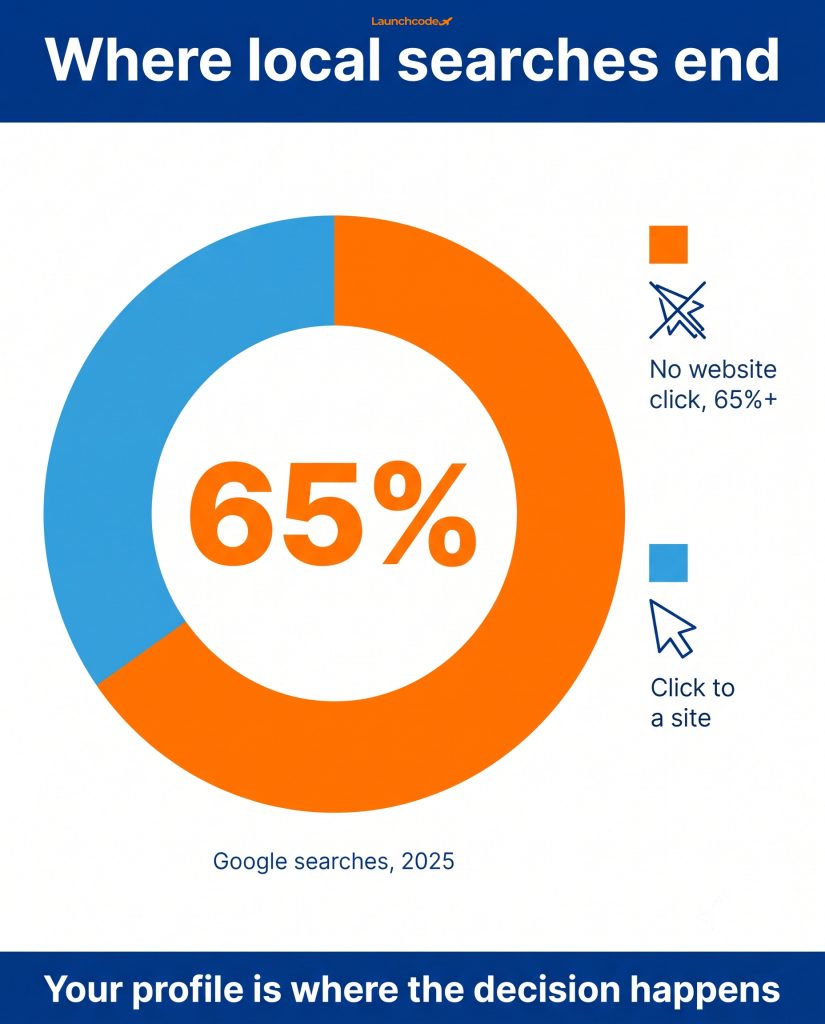
SparkToro reported that more than 65 percent of Google searches in 2025 ended without a click to any website, and the share is higher for local searches. When customers stay inside Google, your profile becomes the place where the decision happens. An AI agent that answers well on the profile captures leads that would otherwise vanish.
This messaging push lines up with Ask Maps, the Gemini powered local search feature that rolled out in the US in March 2026. Ask Maps reads your profile, reviews, photos, services, and hours to decide if you fit a customer’s question. The same complete, specific profile that wins in Ask Maps also gives your chatbot accurate answers. This is where strong local SEO and GEO work compounds, since one clean profile feeds every AI surface.
Prepare now so you are ready the day messaging reaches your account. The work is the same work that improves AI search visibility, so it pays off either way. Focus on clean profile data, a solid website FAQ, clear voice settings, and a weekly review habit. None of this requires the feature to be live in your market yet.
Follow a simple order so nothing gets missed.
Get the data right once, and every AI surface benefits. The same inputs serve messaging, Maps, and AI Overviews, so the prep work is never wasted even before messaging reaches you.
Messaging is back on Google Business Profile, and this version is built to last because it solves the response time problem that sank the old chat. The AI agent answers customers around the clock, hands the hard questions to you, and may soon open conversations straight from your Search ads. Most of it is still rolling out, and some is in pilot, so access varies by account today.
The smartest next step is to prepare your data now. Tighten your profile, build a website FAQ, and decide who owns the agent’s answers. When messaging reaches your market, you will turn it on with confidence instead of scrambling to catch up.
Yes. Google ended chat and call history on July 31, 2024, and stopped new chats on July 15, 2024. The 2026 feature is a new AI agent built on RCS Business Messaging, not the old chat.
The agent answers on its own and hands the chat to you when it needs help. You set where that handoff happens, and your messages split into what needs your attention and what the agent handled.
It depends. The retail Business Agent is rolling out in the US for qualifying e-commerce brands. The local four-tab messaging view looks like a pilot. WhatsApp and SMS from the profile have been available since 2025. Check your dashboard.
From your data. It reads profile fields, services, hours, reviews, and your website. For retail brands, it also reads Merchant Center product data. Vague or outdated information produces wrong answers, so clean data matters.
Yes, it can. An agent answering in your voice will sometimes get things wrong, and your business owns that answer. Assign someone to review chat logs weekly and correct errors at the source.


Real stories from the people we’ve partnered with to modernize and grow their marketing.