
949.822.9583
support@launchcodex.com
  • Creative & brand strategy

The role of digital marketing in branding today

Last Date Updated: October 1, 2025
  • 6 minute read
Digital marketing shapes brand perception by controlling when and how people see your message across channels like search, social, email, and content. When every campaign reinforces the same story and proof, brands build recognition, trust, and measurable growth. The key is consistent execution, clear metrics, and ongoing refinement.
The role of digital marketing in branding

Table Of Contents

Share This Article
Build-operate-transferCo-buildBuild-operate-transferVenture sprint
Ready for a free checkup?
Get a free business audit with actionable takeaways.
Key takeaways (TL;DR)
  • Strong brands show up consistently across SEO, content, email, and social with one clear message
  • Data-driven reviews help teams align campaigns with real outcomes like awareness, engagement, and conversions
  • Branding works best when digital marketing, measurement, and strategy operate as one system

Branding now happens across every digital touchpoint. It is no longer limited to a logo or tagline. It builds through repeated interactions on channels such as websites, email, and social platforms, where users form opinions based on consistency and experience.

Psychology plays a clear role. Recognition often comes from repeated exposure and clear positioning across channels, not one campaign. When your message stays consistent across channels like your website, email, and social platforms, you build trust and familiarity that shape buying decisions.

To build a strong presence, your brand message should line up across every channel. This creates clarity for your audience and reduces confusion. Companies that approach branding as a unified system tend to see stronger recall and more repeat customers.

Ready to grow your organic traffic?

Get a free SEO audit from the Launchcodex team.

Book a Free Audit

Key digital marketing channels for brand visibility

The strongest brands show up consistently across search, content, email, and social, and they measure what works on each channel.

Here are core channels that drive brand visibility:

  • Social media: Acts as a direct line of communication between brands and customers, and allows real conversation.
  • Search engine optimization (SEO): Improves discoverability when users search for answers, products, or comparisons.
  • Content marketing: Provides practical guidance that demonstrates expertise and answers real questions buyers have.

Search advertising remains central to digital marketing. Reliable industry sources report that paid search accounts for a large share of marketing budgets and performance. At the same time, users spend several hours a day across multiple social platforms, which means brand building requires showing up where those users already spend time.

By investing in these channels, you give your audience more ways to engage, learn, and build trust with your company.
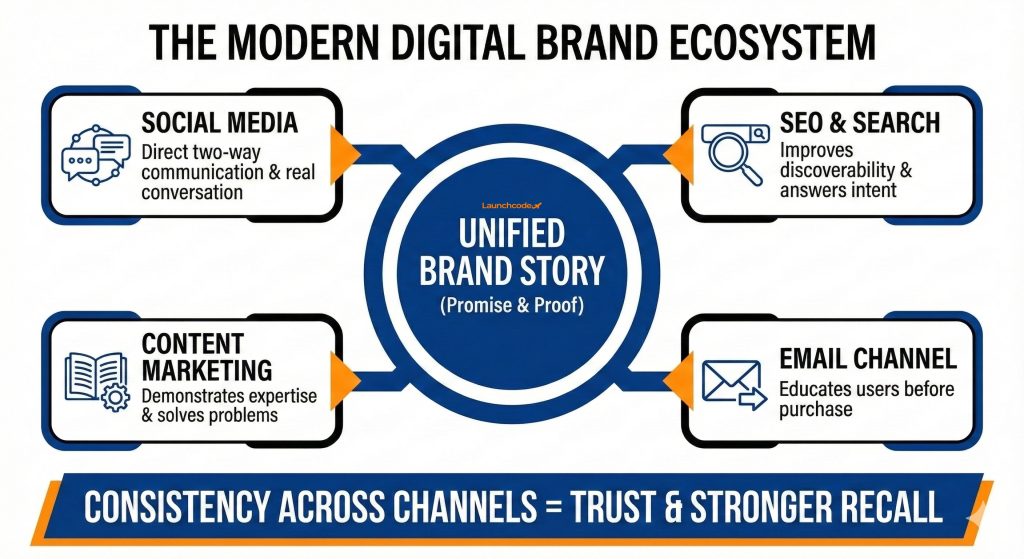
The Modern Digital Brand Ecosystem

Best practices for integrating digital marketing and branding

Digital marketing supports branding when every campaign reinforces the same story, promise, and proof.

Practical strategies include:

  • Use data-driven approaches: Track metrics in tools like GA4 and Looker Studio so your decisions align with real outcomes.
  • Encourage accountability: Define clear goals and review results on a regular cadence.
  • Keep campaigns in check: Audit channels such as SEO, paid search, and email to identify gaps and progress.

When brands make decisions based on clear data, they improve alignment between message, channel, and audience. Over time, this creates stronger recall and trust.

How digital marketing influences brand perception

Digital marketing shapes how users think about your brand because it controls what they see, when they see it, and how clear your message feels.

Targeted campaigns let you speak directly to specific audiences based on behavior and intent. This creates relevance, which helps users feel like the content fits their needs.

For example:

  • Retargeting ads remind users of products they viewed.
  • Email sequences educate users before they make a purchase.
  • SEO driven guides answer questions before a sales conversation starts.

This consistent presence reinforces credibility. When users repeatedly see helpful content, they start to associate your brand with reliability.
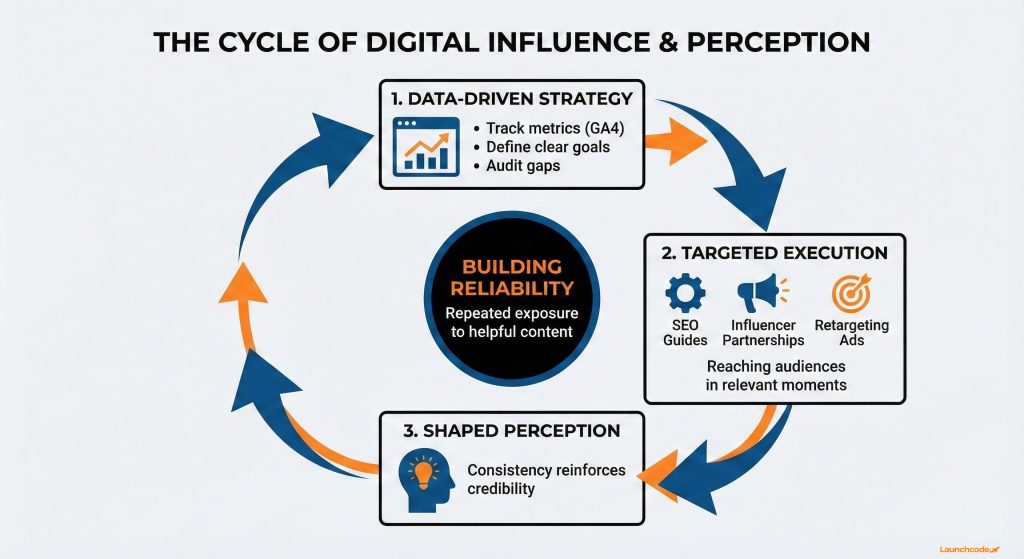
The Cycle of Digital Influence & Perception

What are the most effective digital marketing strategies for building a brand?

The most effective strategies create helpful content, show proof, and reach audiences in relevant moments.

Three high-impact strategies include:

  • Influencer partnerships: Work with creators who already have credibility in your market.
  • SEO: Build pages that answer real questions and match search intent.
  • Content creation: Develop guides, explainers, and stories that connect to real problems people face.

Industry reports show steady growth in influencer partnerships because audiences respond to trusted recommendations. Meanwhile, strong SEO programs continue to help brands appear when users are researching.

Brands that update content frequently and respond to audience signals tend to see stronger long-term engagement.

How can businesses measure the impact of digital marketing on branding efforts?

You measure branding impact by tracking awareness, engagement, and conversions across channels in one structured view.

Core metrics include:

  • Engagement rates: Comments, shares, and interactions on content.
  • Conversion rates: Users who complete meaningful actions, such as sign-ups or purchases.
  • Awareness metrics: Branded search volume, direct traffic, and recall surveys.

Performance media planning frameworks also help teams understand where budget moves the needle most. When companies review these numbers often, they refine strategy faster and avoid wasting spend.

Over time, this process strengthens brand perception and supports more predictable growth.
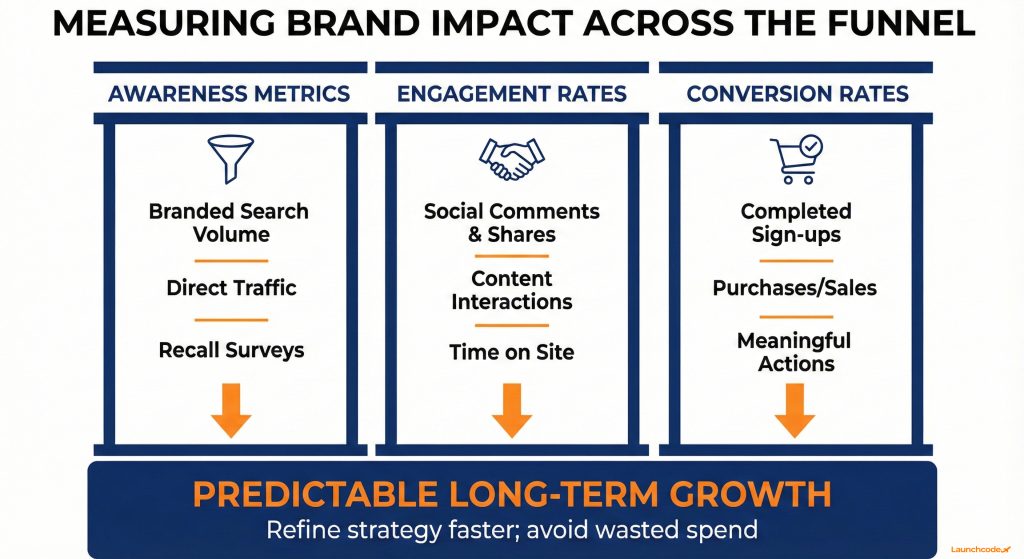
Measuring Brand Impact across the Funnel

Why digital marketing and branding work best together

Digital marketing gives brands tools to shape perception, reach specific audiences, and measure results. Branding gives those same efforts meaning and direction. When both align, companies build recognition, credibility, and loyalty faster.

FAQs

What role does social media play in branding?

Social media supports branding by giving customers direct access to your company and your message.

It creates space for two-way communication. Users can ask questions, share experiences, and see how a brand responds. This builds transparency and credibility.

Strong social programs:

  • Encourage conversation
  • Share proof and real results
  • Tell stories that align with brand values

When social strategies are clear and consistent, they improve customer loyalty and retention.

How can small businesses leverage digital marketing for branding?

Small businesses can use digital marketing to compete by focusing on local presence, trust signals, and consistent messaging.

Practical tactics include:

  • Social media marketing: Share real stories and customer results.
  • Local SEO: Optimize Google Business Profiles and local pages so nearby customers can find you.
  • Content creation: Publish simple guides that answer common questions.

These actions help small businesses build trust without relying on large advertising budgets. Over time, visibility grows and customers recognize the brand more often.

What are some common pitfalls in digital branding?

The biggest risks come from inconsistency and ignoring data.

Frequent issues include:

  • Inconsistent branding across channels
  • Weak engagement strategies
  • No measurement of what is working

Brands that fix these issues early tend to see better recognition and stronger long term results.

Share:
Launchcodex author image - Brittany Charles (1)
About the Author
Brittany Charles
SVP, Client Services
Brittany leads client delivery and account strategy. She ensures every engagement is organized, clear, and tied to business results. Her approach blends structure, communication, and accountability.
Launchcodex blog spaceship

Join the Launchcodex newsletter

Practical, AI-first marketing tactics, playbooks, and case lessons in one short weekly email.
Weekly newsletter only. No spam, unsubscribe at any time.
Envelopes

Want results like these? Let’s build your case study next.

If you're ready for smarter systems, scalable strategy, and results that move the needle, let’s talk.

Explore more insights

Real stories from the people we’ve partnered with to modernize and grow their marketing.