
Share:

AI marketing & automation


Most advice on AEO content optimization gives you a long list of tactics and no proof of which ones matter. That leaves writers guessing where to start. The Launchcodex AI visibility study gives a clearer answer. It audited 390 public pages across 11 domains between October 18 and 27, 2026. AI platforms had cited 217 of those pages. They had not cited the other 173.
The biggest difference was the opening. 65% of cited pages led with a direct answer, against 38% of pages that were not cited. That is a correlation at one point in time, not proof of cause. It still points to a clear stance. Before you add schema or write a new page, rewrite the first two sentences and the headings of the pages you already have. This post shows how to write both, how the traits add up, what to fix first, and how much weight to give the evidence.
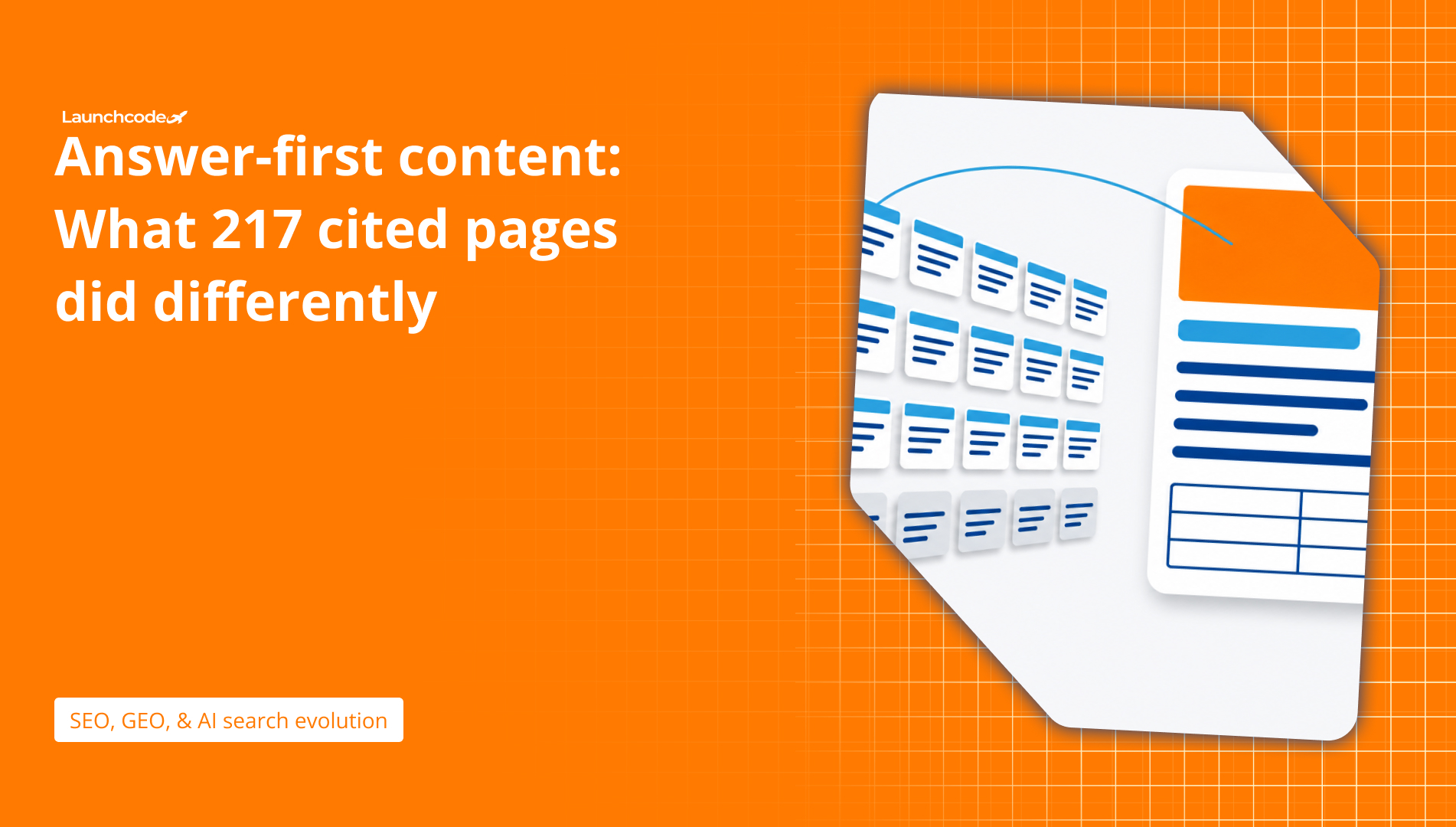
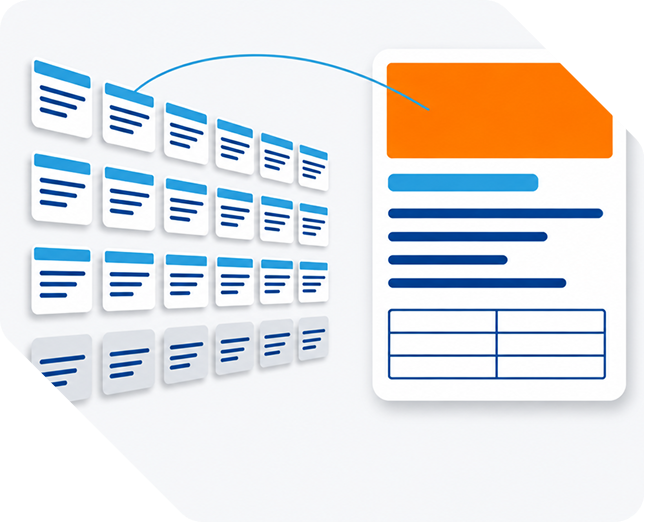
Cited pages led with a direct answer more often than pages that were not cited. In the Launchcodex audit, 65% of cited pages opened with a direct answer, against 38% of pages that were not cited. Clear heading structure also separated the two groups, 67% against 47%. The opening showed the largest gap of any trait measured.
The audit defines an answer-first opening as a direct answer in the first one or two sentences, with background after it. It defines a clear structure as headings that describe what each section answers, short sections that stay on one point, and lists or tables for steps and comparisons.
| Page trait | Cited pages (217) | Not cited pages (173) |
|---|---|---|
| Led with a direct answer | 65% | 38% |
| Used a clear heading structure | 67% | 47% |
Both traits are text edits. You do not need a new design or a new tool to fix them.
Read the table with care. The audit coded 13% of pages as unclear on the opening and counted them as not answer-first. The sample spans 11 domains, and large platforms such as YouTube, Forbes, G2, HubSpot, and LinkedIn make up much of it. Small business sites are underrepresented. Some gaps may reflect differences between sites.
Here is how we read the limit:
“The audit shows these traits appear alongside citations. It does not prove they cause them. We still build pages this way, because an answer first opening and a clean structure make a page easier for people to use, whatever an AI platform decides.”
Derick Do, Co-Founder & Chief Product Officer at Launchcodex
A larger outside dataset points the same way. Semrush compared 304,805 AI cited URLs with 921,614 Google ranking URLs. Cited pages scored higher than similar Google ranking pages on clarity and summarization (up 32.83%), Q&A format (up 25.45%), and section structure (up 22.91%). Semrush calls these associations, not proof of cause. Its numbers are score differences, so do not set them beside the audit percentages.
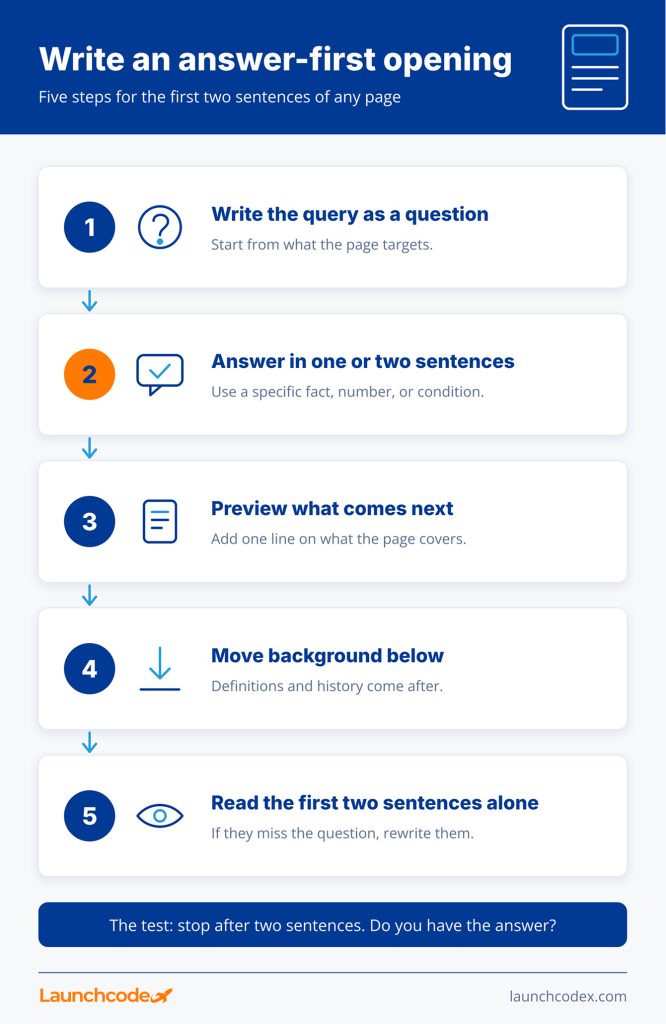
Answer the question the page targets in the first one or two sentences. Name the answer, add the one fact that proves it, and move background below. A reader who stops after two sentences should still have what they came for. If the opening only introduces the topic, it is not answer-first.
Start with the query the page targets. Then follow this process:
Outside data supports the focus on the top of the page. Kevin Indig analyzed 18,012 verified ChatGPT citations and found that 44.2% came from the first 30% of a page’s text. His data covers ChatGPT only, and it measures where the cited passage sits, not whether the page opens with an answer. Ryan Law, Director of Content Marketing at Ahrefs, gives the same advice in one line: “Put the conclusion in the first sentence or two, then support it.”
This example is illustrative. It is not a real company page. Say a software company publishes a page for the query “how to set up a shared team calendar.”
| Version | Opening | What the reader gets |
|---|---|---|
| Before | Calendars help teams stay organized. Whether you run a startup or a large department, shared calendars have become an essential tool for modern work. | No answer after two sentences |
| After | Create one shared calendar, add each teammate with edit access, and set a default view. The steps below walk through each setting. | The answer in sentence one and a preview of what follows |
Write each heading as the question its section answers, then put the answer in the first sentence under it. In the audit, 67% of cited pages used a clear heading structure, against 47% of pages that were not cited. Move steps into numbered lists and comparisons into tables. Skip vague labels such as Overview or Tips.
Heading edits are the fastest fix on an existing page. You change labels and the first sentence of each section. You do not rebuild the page.
Here is how the same illustrative calendar page changes.
| Vague heading | Question heading | Why it helps |
|---|---|---|
| Overview | What does a shared calendar do for a team? | Names the question the section answers |
| Getting started | How do you create a shared calendar? | Matches a real search |
| Permissions | Who can edit a shared calendar? | Names the reader’s concern |
The best outside support comes from Mahe Chen and Nick Koudas, in an arXiv preprint that has not been peer reviewed. Within the same website, the one on-page trait that mattered was a title and paragraphs that match the questions people ask. FAQ blocks, structured data, summary boxes, and page speed showed an effect only when comparing different websites. Question headings fit that finding.
Use a numbered list for a process, like the five steps above. Use a table when you compare options, like the before and after tables in this post. Keep each section on one point and each paragraph short.
Clear headings do not mean splitting a page into small blocks. Google’s guide to generative AI features says content does not need to be broken into tiny pieces. Danny Sullivan of Google was asked on the Search Off the Record podcast about turning content into bite-sized chunks for LLMs. Search Engine Land reports that he said “we don’t want you to do that,” and that creators should not make two versions of their content. Keep one page for people. Give it a clear opening and clear headings.
Yes, in the audit. The share of cited pages rose with each trait a page had, from 27% of pages with none of three traits to 86% of pages with all three. The three traits were an answer-first opening, clear structure, and schema. This is a pattern in one sample, not a recipe that guarantees citation.
| Traits on the page | Pages in the audit | Share cited |
|---|---|---|
| None of the three | 51 | 27% |
| One | 145 | 48% |
| Two | 143 | 63% |
| All three | 51 | 86% |
Read the two end groups with some caution, because each holds 51 pages. The table shows that traits appear together on cited pages. It does not show that adding one trait before another changes the result.
Schema needs the most care. On its own, it showed the smallest gap of any trait measured, with schema on 43% of cited pages and 33% of pages that were not cited. That is why schema sits last in the order of work below.
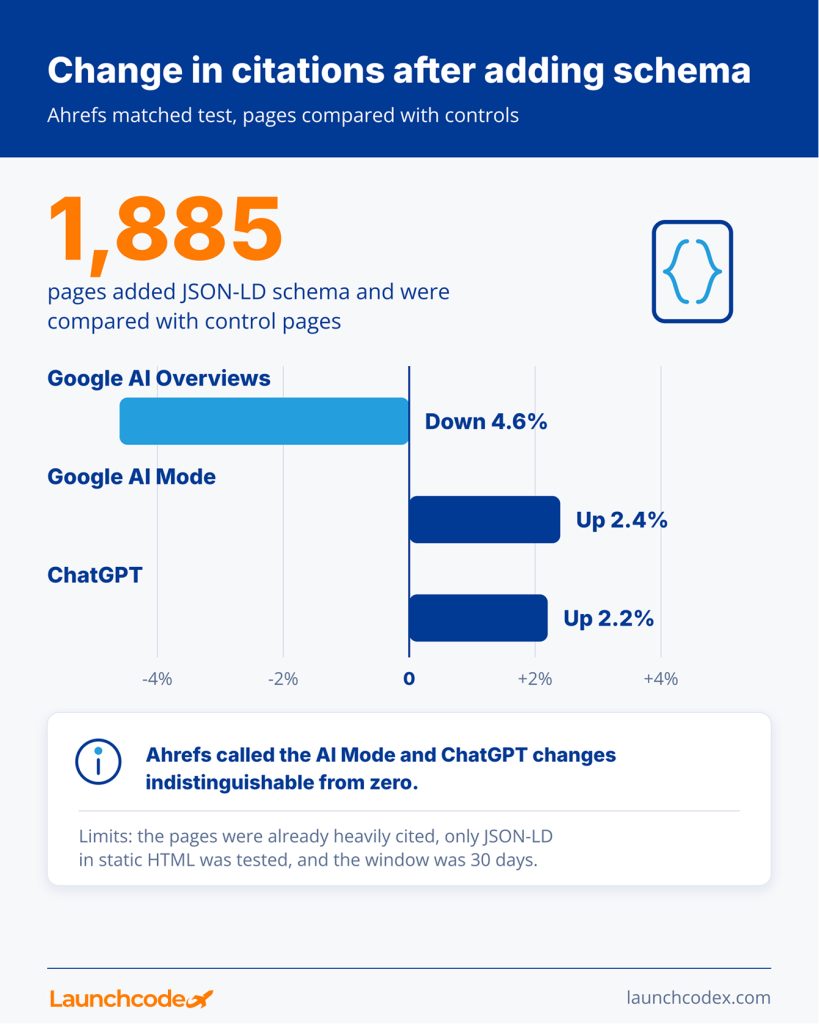
A matched test shows why the caution matters. Ahrefs tracked 1,885 pages that added JSON-LD schema and compared them with control pages. The change in citations was down 4.6% on Google AI Overviews, up 2.4% on Google AI Mode, and up 2.2% on ChatGPT. Ahrefs called the AI Mode and ChatGPT changes indistinguishable from zero. An earlier Ahrefs correlation analysis of 6 million URLs had found AI cited pages almost three times as likely to have JSON-LD. That strong correlation did not become a clear lift in the matched test.
The test had limits. The pages were already heavily cited, only JSON-LD in static HTML was tested, and the window was 30 days. Google’s guide also says structured data is not required for generative AI search. For the effort side of schema, see our post on where marketers spend time the data does not support.
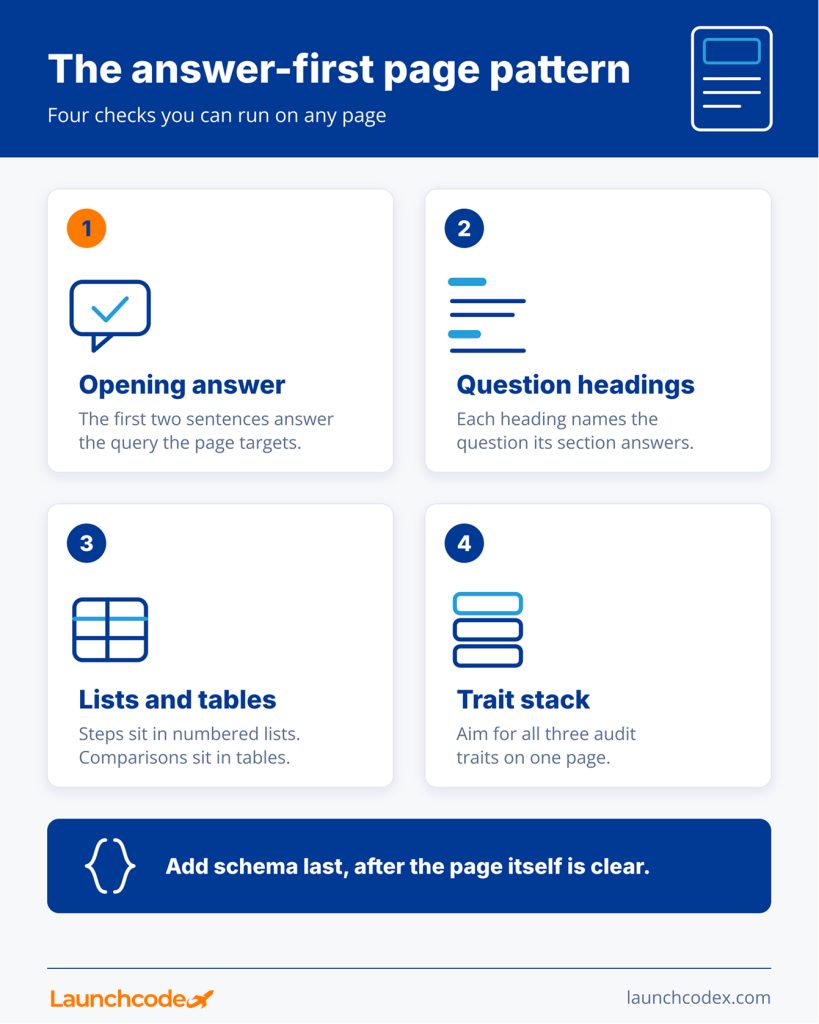
Rewrite the first two sentences, then the headings, then add lists and tables where steps or comparisons sit in long paragraphs. Check schema last. This order follows the size of the gaps in the audit. The opening had the largest gap of any trait measured, and schema had the smallest.
The answer-first page pattern is a four-part check you can run on any page.
The order comes from the size of each gap. The audit does not prove that sequence matters. Named authors, cited sources, and updates are separate work. This post stays on the opening and the structure.
Our AI citation readiness audit checklist walks through the audit step by step. This is how the team uses it:
“We run this audit before anyone writes a new page. Fixing the opening and the headings on a page you already have is cheaper than publishing a new one, and those two traits showed the biggest gaps in our audit.”
Tanner Medina, Co-Founder & Chief Growth Officer
Marketers lean the same way. The Launchcodex survey of 155 qualified marketers ran from October 15 to November 5, 2026. Of the 152 who answered the page trait question, 26% named answer-first content as the trait that matters most for AI citations. It was the most common single answer, with a margin of error of plus or minus 8 points. Of the 124 who answered the actions question, 35% had rewritten pages to lead with the answer, with a margin of error of plus or minus 9 points. These figures show what marketers believe and say they did. They do not show what works.
Give it moderate weight as a starting point, not as proof. The audit shows traits that appeared alongside citations at one point in time. Chen and Koudas found that retrieval, meaning which pages the engine’s own search returns, explained far more of the variation in citations than page properties did (32% against 2.8%). Use the findings to set the order of your edits, not to promise results.
Keep three limits in mind:
Google’s guide frames optimizing for generative AI search as optimizing for the search experience. The audit does not contradict that. An answer-first opening and clear headings help readers whether or not an AI platform cites the page. That is the reason to start there.
In the audit, 65% of cited pages led with a direct answer, against 38% of pages that were not cited. Clear headings showed a similar split, 67% against 47%, and the share cited rose as pages gained traits. None of this proves cause. All of it is cheaper to act on than a new page.
Pick one page that already matters to your business. Rewrite its first two sentences so they answer the query the page targets. Turn its headings into the questions each section answers. Then add schema only if the page is already clear. To check what changes, read our post on how to track AI citations when ChatGPT gives a different answer each time.
To see the full audit method and every finding, download the full study, What gets cited in AI search: The 2026 Launchcodex AI visibility study.
It is a one or two sentence direct answer at the top of a page, with background after it. It answers the query the page targets before it gives any context.
No. Each heading should name the question its section answers. A short noun phrase can do that when the question is obvious. Use a question when the label is vague, such as Overview or Tips.
Schema showed the smallest gap in the audit, 43% of cited pages against 33% of pages that were not cited. In the Ahrefs matched test of 1,885 pages, the AI Mode and ChatGPT changes were indistinguishable from zero. Fix the opening and the headings first.
Nothing in the audit shows that it will. The audit finds a correlation at one point in time. A rewrite does make the page easier for readers, which is a gain either way.
The audit pooled pages cited by any platform, so it does not show platform differences. ChatGPT, Perplexity, and Google AI Overviews pick sources in different ways. Read our post on how each AI platform picks sources for the details.


Real stories from the people we’ve partnered with to modernize and grow their marketing.